
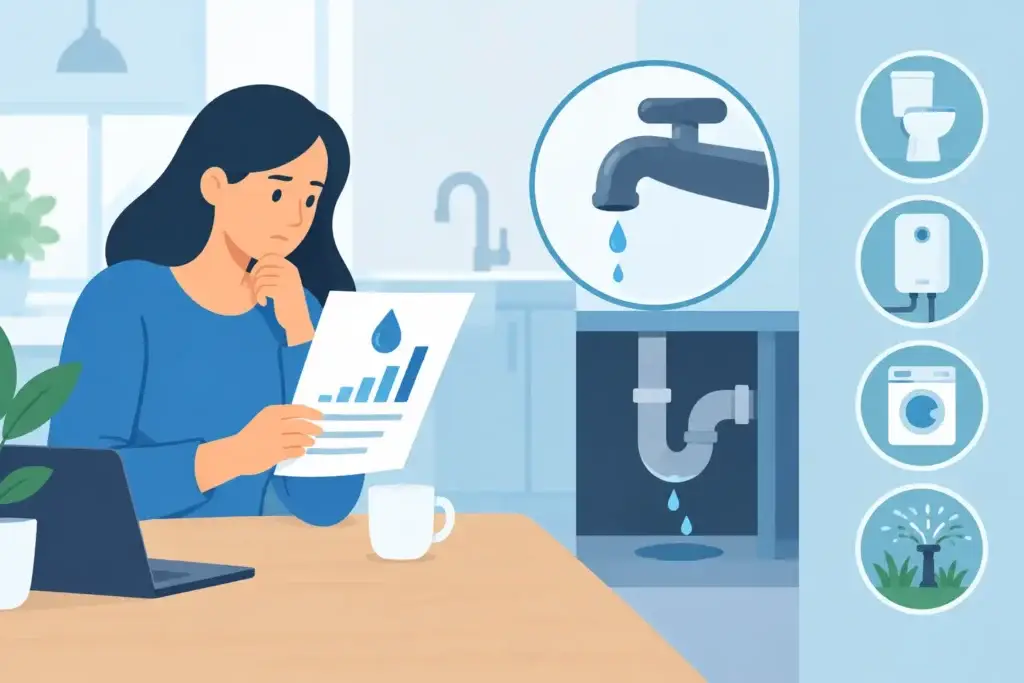
A water bill that suddenly doubles is rarely something to ignore until next month. A family may not notice a slow toilet leak or a broken irrigation line, but the water meter does. For homeowners, landlords, and business owners, finding high water bill causes quickly can prevent wasted water, property damage, and a much larger repair.
The key is to compare the increase with what changed at the property. A higher bill after filling a pool, hosting guests, or watering new landscaping may have an obvious explanation. A sharp increase without a clear change in use usually calls for a closer inspection.
High Water Bill Causes Often Start With a Leak
Leaks are one of the most common reasons for unexpectedly high water use. Some are easy to see under a sink or around a water heater. Others run behind walls, under slabs, in crawl spaces, or underground between the meter and the building. Those hidden leaks can waste a significant amount of water before they leave visible signs.
Watch for warm or damp flooring, musty smells, peeling paint, stained ceilings, low water pressure, or an area of landscaping that stays unusually green or wet. A leak beneath a concrete slab may also create warm spots on the floor or the sound of water moving when every fixture is off.
A leaking pipe is not always dramatic. Even a small, steady leak can run day and night, which is why the bill may be the first warning. Leaving it alone risks damage to framing, flooring, insulation, and nearby electrical components. On a rental or commercial property, the cost can extend to disrupted tenants or business operations.
Use Your Water Meter to Narrow Down the Problem
A simple meter check can help determine whether water is moving when it should not be. First, turn off faucets, showers, dishwashers, washing machines, irrigation systems, and other water-using equipment. Do not use water during the test.
Locate the water meter and note the reading or small leak indicator. Wait 30 to 60 minutes, then check again. If the indicator moves or the reading increases while all water is off, water is likely escaping somewhere on the property. This test does not identify the exact location, but it confirms that a professional leak inspection is worth scheduling.
If you see flooding, hear water rushing inside a wall, or cannot shut off the flow, turn off the main water supply if it is safe to do so and request emergency plumbing help. Fast action limits water damage.
A Running Toilet Can Waste Hundreds of Gallons
Toilets are a frequent source of high water bill causes because the problem can be almost silent. A worn flapper, damaged fill valve, incorrect water level, or mineral buildup can allow water to run continuously from the tank into the bowl.
Listen for a toilet that refills on its own long after flushing. You may also hear a faint hissing sound or see ripples in the bowl. For a quick check, add a few drops of food coloring to the tank and wait about 15 minutes without flushing. If color appears in the bowl, water is leaking past the flapper.
Replacing a flapper may solve a simple issue, but not every toilet problem is that straightforward. Older toilets can have worn internal components, loose connections, or cracks that need a proper repair or replacement. In a multi-unit building, checking every toilet is especially important because several small leaks can create a surprisingly large bill.
Outdoor Water Use Can Climb Quickly
Irrigation is another major source of unexpected water use, particularly when a system runs before sunrise or after everyone leaves a commercial property. A cracked sprinkler line, broken sprinkler head, disconnected drip line, or controller programmed for too many cycles can send water into the ground without drawing attention.
Walk the landscape while the irrigation is operating. Look for geysers, pooling water, muddy areas, water spraying sidewalks, and heads that are not reaching the intended planting areas. Check the controller after power outages or seasonal schedule changes. An irrigation program that was reasonable in summer may be excessive during cooler or wetter periods.
Outdoor spigots deserve attention as well. A hose left running, a leaking hose bib, or a damaged hose connection can add up. For properties with shared outdoor areas, make sure tenants, maintenance staff, and landscaping crews understand who is responsible for reporting irrigation problems.
Fixtures, Appliances, and Water Heaters May Be Part of the Increase
Dripping faucets are easy to dismiss, but a persistent drip should be repaired. More concerning are leaks at supply valves, refrigerator water lines, washing machine hoses, dishwasher connections, and water heater fittings. These areas may leak only while an appliance is running, so inspect them during normal use.
A water heater can also contribute to water loss. Check around its base for moisture and inspect the temperature and pressure relief valve discharge pipe for ongoing dripping. Do not cap or tamper with that safety valve. A professional should evaluate repeated discharge, corrosion, or a leaking tank.
Not all higher use means something is broken. A new high-capacity washing machine setting, frequent laundry, longer showers, or a growing household can affect the bill. Older fixtures also use more water than modern efficient models. The right answer depends on the condition of the plumbing and how the property is being used. Repairing a leak comes first; replacing functional fixtures may make sense when water savings, reliability, and appearance justify the investment.
Consider Billing Changes Before Assuming the Worst
Before opening walls or scheduling excavation, review the bill itself. Compare the current billing period with the same period last year, not only the month before. Seasonal irrigation, holiday guests, and weather patterns can make month-to-month comparisons misleading.
Check the number of billing days, the meter read dates, total gallons used, and any changes in water or sewer rates. Some utilities use tiered pricing, meaning that crossing a usage threshold can make the total rise faster than expected. A utility billing error is less common than a leak, but it is reasonable to ask the provider to verify an unusual reading.
If the property has a vacant unit, verify that nobody is using water without authorization. On commercial sites, review cleaning schedules, restroom traffic, kitchen operations, ice machines, and landscape maintenance. A change in occupancy or operations can explain part of the increase, but it should still be measured against the meter reading.
When to Call a Plumber for a High Water Bill
Call for professional help when the meter shows use with all fixtures off, the source cannot be found, or you see signs of moisture inside the structure. A plumber can isolate plumbing sections, inspect fixtures and supply lines, perform hidden leak detection, and recommend a repair based on the actual source rather than guesswork.
This matters because a visible symptom is not always the origin of the problem. Water near a wall may travel from a leak several feet away. Replacing a faucet will not correct a damaged line below a slab, and repeatedly resetting an irrigation controller will not repair a broken underground pipe.
For Monterey County property owners, RS Plumbing provides direct help with hidden water leak detection and repair, toilet and fixture repairs, water heater concerns, and urgent plumbing problems. Licensed, insured work and a clear explanation of the repair give you a practical path forward without treating a higher bill as a mystery.
A sudden bill increase is a useful warning, not just an expense. Check the meter, inspect the obvious water users, and act promptly when the numbers do not make sense. Finding the cause early protects your property, your water supply, and your budget.
