
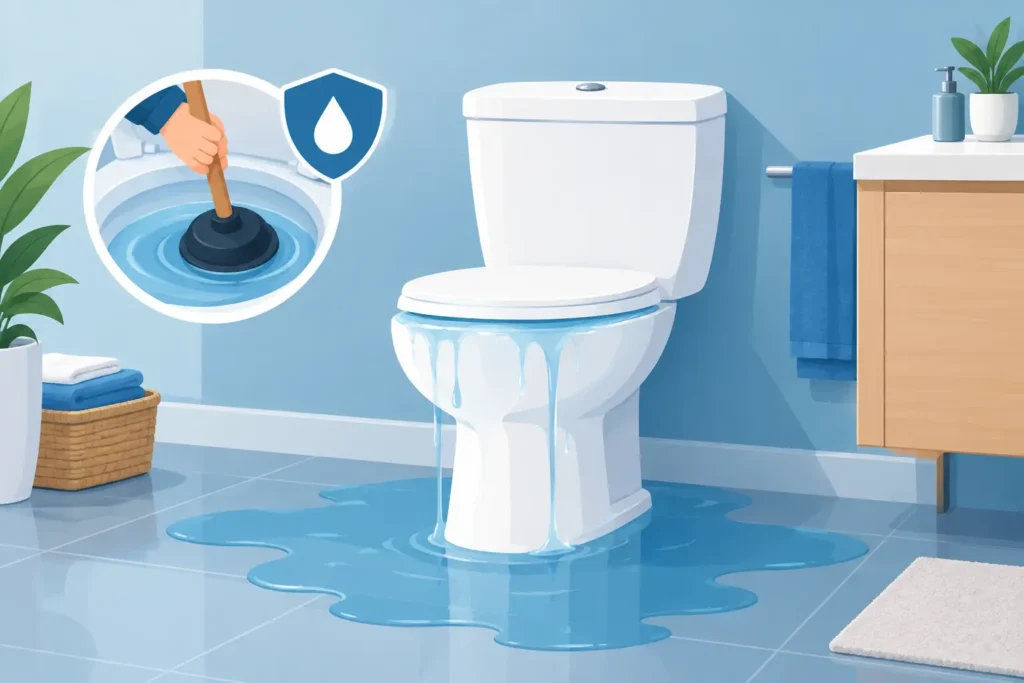
A toilet can go from a normal flush to water spilling across the floor in seconds. Knowing how to stop toilet overflow quickly can protect your flooring, walls, cabinets, and the rooms below. The first priority is not finding the clog. It is stopping the water.
Stop Toilet Overflow Immediately
Do not flush again. A second flush can send more water over the rim, especially when a clog is blocking the trap or drain line.
First, remove the tank lid carefully and set it somewhere safe. If water is still rising in the bowl, lift the float inside the tank to stop the tank from refilling. Depending on the toilet, this may be a float cup around the fill valve or a floating ball connected to an arm. Hold it up until the water stops running.
Next, turn off the toilet’s shutoff valve. It is usually located on the wall or floor behind the toilet, connected to the supply line. Turn the valve clockwise until it stops. If the valve is stuck, do not force it hard enough to damage the pipe or connection. Keep the float raised while you decide whether to call for help.
If the bowl is close to overflowing, use towels to contain water around the base of the toilet. Wear gloves, especially if the water may contain waste. Avoid using bath towels or items you intend to keep. Water from an overflowing toilet can carry bacteria, and contaminated materials may need proper cleaning or disposal.
If the Toilet Is Already Overflowing
Once the water is shut off, do not assume the emergency is over. Water can seep under baseboards, into flooring seams, and through ceilings below. Remove standing water as soon as possible with disposable towels, a mop, or a wet/dry vacuum intended for water pickup. Open windows or run fans to help dry the area, but do not use electrical equipment near standing water.
If wastewater has spread beyond a small area, or if water has reached carpet, drywall, electrical outlets, or another floor, professional plumbing and cleanup support may be necessary. Acting early can make a major difference in preventing odor, mold, and material damage.
Why Toilets Overflow
Most overflows come from one of two problems: a blockage prevents the bowl from draining, or the toilet continues filling when it should stop. The response is different for each issue.
A clog is likely when the toilet bowl rises right after a flush but the tank is otherwise operating normally. Excess toilet paper, wipes, hygiene products, small objects, or a buildup in the toilet trap can slow or block flow. Even products labeled “flushable” can cause trouble in older plumbing systems or sewer lines with roots, scale, or damage.
A fill problem is more likely when the bowl is not clogged, but water keeps running into the tank or down the overflow tube. A worn flapper, improperly adjusted float, failing fill valve, or damaged overflow tube can allow water to keep entering the system. In some cases, water may run continuously without overflowing the bowl, wasting a surprising amount of water and raising utility costs.
There is also a more serious possibility: a sewer main or branch drain obstruction. If toilets, tubs, showers, or floor drains are backing up together, the problem may be beyond the toilet itself. A plunger will not clear a sewer line blockage, and repeated flushing can spread sewage through the property.
Clear a Simple Toilet Clog Safely
Only try to clear the toilet after the water level has dropped and the shutoff valve remains off. Use a flange plunger made for toilets, not a flat sink plunger. The extended rubber flange creates a better seal in the toilet drain opening.
Place the plunger over the opening, make sure it is covered with enough water to create suction, and use steady, controlled strokes. Start gently to avoid splashing. Then plunge firmly for 15 to 20 seconds and wait to see whether the bowl begins draining. You may need to repeat the process a few times.
If the water drains normally, turn the shutoff valve back on slowly. Let the tank refill, then perform one test flush while watching the bowl. If the level rises again, stop immediately and keep the water supply off.
Do not use chemical drain cleaners in a toilet. These products can damage components, create hazardous splashes, and leave corrosive chemicals in the bowl if a plumber needs to work on the drain. Do not force a wire hanger or improvised tool into the toilet, either. It can scratch the porcelain or push an object farther into the drain.
A toilet auger can be useful for a stubborn clog in the trap, but it needs to be used correctly to avoid damaging the fixture. If you do not have experience with one, calling a plumber is usually the safer choice.
When an Overflow Signals a Bigger Drain Problem
One overflowing toilet can be a simple fixture-level clog. Multiple drain problems at once are a warning sign that the issue may be in a shared drain line or sewer main.
Watch for toilets that bubble when a shower drains, water appearing in a tub after flushing, slow drains throughout the building, sewage odors, or a backup at a floor drain. For landlords and property managers, these signs deserve prompt attention even if the toilet appears to be working again. A partial blockage can return at the worst possible time, often during heavy use.
In commercial properties, a toilet overflow can quickly disrupt customers, employees, and operations. Restaurants, offices, retail spaces, and hospitality properties may have shared plumbing loads that make a small drainage issue escalate fast. Closing off the affected restroom, posting a clear notice, and arranging professional service protects both the property and the people using it.
Sewer line problems may be caused by root intrusion, grease accumulation, pipe scale, collapsed piping, offset joints, or an object lodged farther down the line. The right repair depends on the cause. Drain clearing may restore flow, while recurring backups can call for camera inspection and a more permanent sewer line repair.
Avoid These Common Mistakes
The most expensive mistake is continuing to flush. If a toilet does not clear on the first flush, give it time and assess the water level before doing anything else.
Another common mistake is treating every backup as a toilet problem. If nearby fixtures are draining poorly or backing up, do not keep plunging and flushing. Shut off the toilet water supply and have the drain system evaluated.
Property owners also sometimes overlook a toilet that runs continuously after an overflow. Even if the bowl is no longer rising, a faulty fill valve or flapper can waste water and may overflow later if the tank’s safety overflow is not functioning as it should.
Finally, do not ignore water around the base of a toilet that happens without flushing. That may indicate a failed wax ring, loose toilet, cracked bowl, leaking supply connection, or another issue that requires repair. The source matters because a surface cleanup alone will not protect the subfloor.
When to Call a Plumber for Toilet Overflow
Call for professional help if plunging does not restore normal drainage, the toilet overflows repeatedly, wastewater has escaped onto the floor, or other fixtures are backing up. You should also call if the shutoff valve will not close, the toilet is leaking from the tank or base, or you suspect a sewer main problem.
For homeowners and businesses in Seaside, Marina, Salinas, Carmel, Pacific Grove, and Monterey County, RS Plumbing provides 24/7 emergency plumbing response, drain clearing, sewer service, and toilet repair. With 15 years of experience, licensed and insured workmanship, and free estimates, the focus is on finding the real cause rather than applying a temporary patch. Hablamos Español.
A quick shutoff and a calm response can limit the damage, but recurring overflow is your signal to address the drain or fixture before it becomes a larger property problem.
