
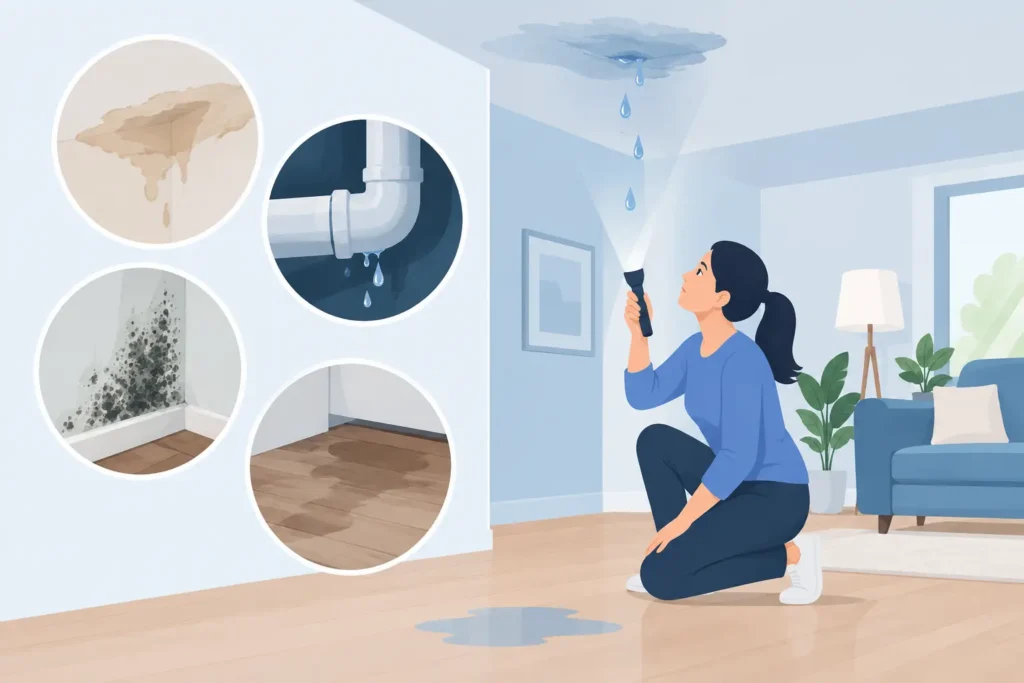
A water leak does not need to flood a room to cause expensive damage. A pinhole leak behind a wall, under a slab, or beneath a commercial restroom can waste water for weeks before anyone sees it. Hidden water leak detection identifies the source before damp framing, mold growth, damaged flooring, and unusually high water bills turn a repair into a larger restoration project.
For homeowners, landlords, and business owners in Monterey County, the right response is not to tear open walls based on a guess. It is to recognize the warning signs, limit the immediate risk, and have a qualified plumber pinpoint the problem with the least disruption possible.
What Makes a Water Leak Hard to Find?
Some leaks announce themselves with a dripping ceiling or a puddle under the sink. Hidden leaks are different. They may develop inside walls, under concrete slabs, in crawl spaces, beneath landscaping, or along pipes that serve fixtures far from the visible damage.
Water follows gravity and takes the easiest path. That means the stain on a ceiling may not sit directly below the leak. A damp spot near a baseboard might come from a bathroom pipe on the other side of the room. In a commercial property, water may travel through a wall cavity before showing up in a hallway, storage room, or tenant space.
Older pipe materials, corrosion, shifting soil, loose fittings, high water pressure, and worn supply lines can all contribute. Coastal conditions and aging plumbing systems can add to the challenge, but even newer properties can develop leaks at connections or from installation defects.
Signs You May Need Hidden Water Leak Detection
Your water bill is often the first clue. If household or business water use has not changed but the bill rises noticeably, water may be escaping somewhere out of sight. A consistently moving water meter when all fixtures and water-using appliances are off is another strong warning sign.
Look for physical changes in the building as well. Peeling paint, bubbling drywall, warped flooring, musty odors, discolored ceilings, and soft spots around walls can all point to moisture where it should not be. Warm areas on a slab floor may indicate a hot-water line issue beneath the concrete.
Do not overlook the sound of water. A faint hissing, rushing, or dripping noise when no fixture is running can indicate a pressurized supply leak. Low water pressure at one or more fixtures can also matter, especially if it appears suddenly and is accompanied by discoloration or dampness.
For rental and commercial properties, tenant reports deserve prompt attention. A small moisture complaint in one unit can affect adjacent units, common walls, electrical components, inventory, or finished surfaces. Acting early helps protect both the property and the people using it.
A Simple Meter Check
If it is safe to do so, turn off faucets, irrigation, ice makers, washing machines, dishwashers, and other water-using equipment. Then check the water meter. Record the reading and avoid using water for an hour or two. If the number changes, there may be a leak.
This check does not identify where the leak is, and it will not catch every intermittent issue. It does provide useful information when you call a plumber. If you see active water damage or suspect a major leak, skip the test and get help right away.
How Professional Leak Detection Protects Your Property
Professional hidden water leak detection is about locating the source accurately before repair begins. Depending on the symptoms and plumbing layout, a plumber may use pressure testing, moisture readings, acoustic listening equipment, thermal imaging, camera inspection, or other diagnostic methods.
No single method fits every leak. An acoustic test may help locate a pressurized water line leak, while thermal imaging can reveal temperature differences caused by moisture or a hot-water line. Camera inspection is useful for certain drain and sewer line concerns, but it does not replace testing when the suspected issue is behind a wall or under a slab.
The goal is to reduce unnecessary demolition. In some cases, access through a small section of drywall is the most practical option. In others, the pipe may be rerouted to avoid extensive concrete removal. The best repair depends on the pipe material, the location of the failure, the condition of the rest of the system, and the long-term cost of each option.
A proper diagnosis also helps avoid temporary fixes. Replacing a stained ceiling without correcting the source only covers the evidence. Tightening one visible fitting may not solve a pressure issue, corroded section of pipe, or failed line elsewhere in the system.
What to Do When You Suspect a Hidden Leak
Start by protecting people and property. If water is near outlets, electrical panels, or appliances, avoid touching affected electrical equipment. If water is actively spreading, shut off the local fixture valve when you know which fixture is involved. For a larger or unknown leak, use the main water shutoff if you can do so safely.
Move furniture, boxes, electronics, and merchandise away from wet areas. Take a few photos of visible damage for your records, especially for a rental or commercial property. Then arrange professional service as soon as possible. Waiting to see whether a stain dries out can allow moisture to remain trapped behind finished surfaces.
If a leak is causing active damage, disrupting business operations, or affecting multiple units, treat it as an emergency. The faster the source is isolated, the less water has time to travel through floors, walls, and structural materials.
Repair Options Depend on the Leak Location
Once the leak is found, the repair should address both the damaged section and the reason it failed. A single damaged fitting may need a focused repair. A corroded line with multiple weak points may call for replacing a longer section. Repeated slab leaks or inaccessible piping may make rerouting more sensible than opening large areas of concrete.
For property managers and business owners, repair planning should also consider access, tenant schedules, operating hours, sanitation requirements, and the need to keep critical areas open. A good plumbing contractor explains what was found, what work is necessary, and where there are real choices between repair approaches.
Be cautious about treating leak repair as a price-only decision. The lowest immediate quote may not include accurate diagnosis, proper materials, code-conscious workmanship, or a plan for preventing repeat damage. Clear communication and a written scope help you compare options fairly.
Preventing Future Hidden Leaks
Not every hidden leak can be prevented, but regular attention reduces the risk. Replace aging supply hoses before they fail, repair dripping fixtures promptly, and watch for pressure problems that strain pipes and connections. If your property has older plumbing, recurring leaks, or unexplained water use, a professional evaluation can help identify vulnerable areas.
For landlords and commercial properties, encourage residents, tenants, and staff to report moisture, odor, low pressure, or unusual sounds immediately. Small reports are easier to investigate than major water damage claims. Keeping main water shutoff locations known and accessible also saves valuable time during an emergency.
RS Plumbing provides local leak detection and repair for homes and businesses throughout Seaside, Monterey County, and nearby communities. With 15 years of experience, licensed and insured workmanship, free estimates, and 24/7 emergency availability, the focus is on finding the real source and protecting your property from further damage.
A hidden leak rarely improves by itself. If your meter is moving, your water bill has climbed, or moisture is appearing where it should not, act while the repair can still be controlled and targeted.

Pingback: When Water Heater Replacement Is the Right Move – RS PLUMBING
Pingback: What Is Commercial Plumbing for Local Businesses? – RS PLUMBING
Pingback: Plumbing Services for Landlords That Protect Rentals – RS PLUMBING
Pingback: Commercial Plumbing Maintenance Plans That Prevent Shutdowns – RS PLUMBING