
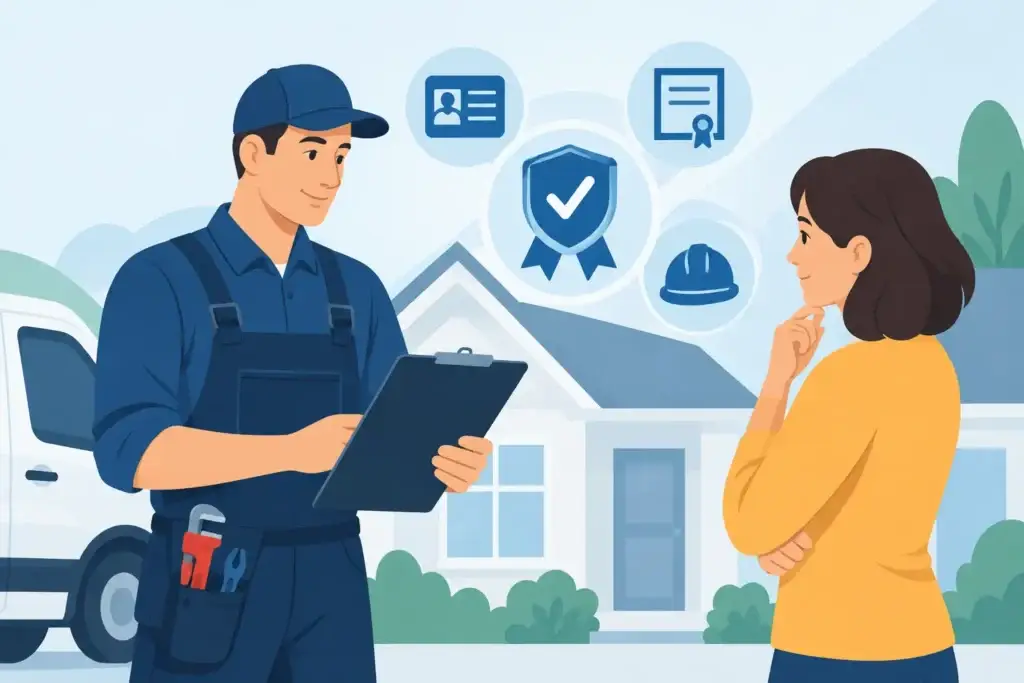
A burst pipe, sewer backup, or suspected gas leak creates pressure to hire the first available person. That is exactly when plumber credentials matter most. The right contractor protects your property with legal authorization, proper insurance, trained workmanship, and a clear plan for solving the actual problem – not just stopping the visible symptom.
For homeowners, landlords, property managers, and business owners in Monterey County, checking credentials does not need to delay needed repairs. A qualified local plumber should be ready to answer direct questions, provide license information, explain the work, and tell you when permits or inspections apply.
Why Plumber Credentials Protect Your Property
Plumbing affects more than sinks and toilets. A poor repair can lead to water damage inside walls, repeated drain backups, sewage exposure, gas hazards, mold conditions, or a water heater installation that does not perform safely. The cost of correcting a bad repair can be far greater than the original service call.
Credentials help separate a professional plumbing contractor from a general repair provider or an unqualified operator. They show that the business is set up to perform work responsibly and can be held accountable for the job. They also give you a better starting point for an informed conversation about the repair, installation, timeline, and cost.
Still, credentials are not a substitute for good judgment. A licensed contractor can be a better fit for one project than another based on their experience with sewer work, commercial systems, gas piping, leak detection, or water heaters. Ask about the type of work you need, not only whether the company has a license.
Start With an Active California Contractor License
For plumbing projects that require a licensed contractor, verify that the company holds an active California contractor license appropriate for the work. A contractor should provide their license number without hesitation. You can then check the license status through the California Contractors State License Board and confirm that the business name matches the information you were given.
This check is especially worthwhile when the job involves substantial repairs, replacement piping, sewer line work, gas lines, water heaters, or alterations to a commercial property. Licensing requirements can depend on the scope and value of the work, so do not assume a small-looking project has no rules attached to it.
Ask whether the license is active and whether there are any restrictions that affect your project. If a contractor says a license is unnecessary but the work sounds significant, pause before authorizing the job. Get a second opinion from a qualified plumbing contractor or check with the local building department.
RS Plumbing operates under CSLB License #1152591. That kind of transparency gives customers a clear way to verify who will be responsible for the work on their home, rental property, office, or business.
Make Sure the License Fits the Work
Not every contractor handles every plumbing task. Drain clearing, sewer repair, hidden leak detection, fixture replacement, water heater installation, and gas piping call for different tools and practical experience. A contractor may be legally licensed yet not be the best choice for a complex sewer main issue or a difficult leak beneath a slab.
Ask a simple question: “How often do you handle this type of problem?” A clear answer should include the likely diagnostic process, possible repair paths, and factors that could affect cost. Be cautious when someone promises a permanent answer before inspecting the system.
Confirm Insurance Before Work Begins
Insurance is one of the most practical credentials a contractor can carry. Plumbing work often happens around finished floors, cabinets, electrical components, tenant spaces, inventory, and operating businesses. Even careful work involves risk, particularly during excavation, sewer repairs, gas piping, or work inside occupied buildings.
Ask whether the contractor carries current general liability insurance and, when applicable, workers’ compensation coverage for employees. A professional company should be able to explain its coverage and provide verification when requested. This is not about expecting a problem. It is about making sure your property is not left exposed if one occurs.
Do not confuse a verbal assurance with proof. “We are insured” should be easy for a contractor to support. If the answer becomes vague or defensive, that is useful information before you let anyone open a wall, access a crawlspace, or work on your gas system.
Ask About Permits and Local Code Requirements
Permits are not needed for every plumbing repair. Replacing a faucet cartridge, clearing a stoppage, or repairing a minor leak may not involve a permit. New gas lines, water heater replacements, major repiping, sewer line replacement, and significant plumbing alterations may require permits and inspections depending on local rules and the project scope.
A qualified contractor should not automatically tell you that permits are a problem to avoid. Instead, they should explain whether one is needed, who will obtain it, what the inspection process may involve, and how that affects scheduling. For landlords and commercial property managers, this documentation can be especially valuable for maintenance records, tenant protection, insurance matters, and future property transactions.
Permit requirements vary by jurisdiction. A project in Seaside may be handled differently than work in Salinas, Carmel, Marina, Pacific Grove, or an unincorporated part of Monterey County. Local familiarity helps, but the contractor should still verify the current requirement rather than relying on assumptions.
Look for Experience That Matches the Problem
Years in the trade matter because plumbing problems rarely follow a neat script. A recurring drain clog may be a damaged sewer line. A wet spot on the floor may come from a hidden supply leak, a failed drain connection, or water traveling from another area. Low hot-water output could be a water heater issue, a fixture issue, or a sizing problem.
Experience helps a plumber investigate before recommending a repair. It also helps them recognize when a quick fix is appropriate and when it would only delay a larger problem. That distinction can save property owners money and prevent repeat service calls.
For specialized work, ask about the equipment and process. For example, sewer and drain diagnostics may involve locating the blockage or damaged section before repair. Hidden leak detection should focus on finding the source with as little unnecessary damage to finished surfaces as possible. Gas line work should include appropriate testing and attention to local requirements.
Emergency Availability Is a Credential of Its Own
A company does not earn trust simply by advertising 24/7 service. What matters is whether it can respond decisively, communicate clearly, and help limit damage after hours. During an emergency, ask what you should do immediately – such as shutting off water, keeping people away from affected areas, or leaving a suspected gas leak situation safely.
A responsible plumber will not diagnose a gas emergency over the phone as if it were routine. If you smell gas or suspect a gas leak, leave the area, avoid sparks or switches, and contact the gas utility or emergency services as appropriate before arranging repairs. Safety comes first.
Expect Clear Estimates and Direct Communication
A free estimate can be helpful, but the real value is clarity. Before work begins, you should understand the reported problem, the recommended solution, the expected cost structure, and what could change if concealed damage or additional failures are found. Plumbing systems often reveal more once access is opened, so no contractor can honestly guarantee every unknown in advance.
That does not give anyone permission to surprise you with vague charges. Ask whether the estimate covers labor, materials, disposal, permits, diagnostic work, and restoration-related plumbing work. For larger repairs, request the scope in writing. If options exist, such as repair versus replacement, ask for the practical trade-offs in lifespan, disruption, and cost.
Good communication also includes respecting your property. The contractor should explain access needs, protect work areas where reasonable, keep you informed if conditions change, and leave the site in an orderly condition. For business owners, they should also consider customer traffic, employee safety, operating hours, and the need to reduce downtime.
Questions Worth Asking Before You Hire
You do not need a long interview. A few direct questions can reveal whether a contractor is prepared and professional:
- Is your California contractor license active, and can you provide the license number?
- Are you insured, and can you provide current verification if requested?
- Have you handled this specific type of plumbing issue before?
- Will this project need a permit or inspection, and who handles it?
- What does your estimate include, and what conditions could change the final cost?
- Who will perform the work, and when can the job be completed?
A trustworthy contractor should answer these questions plainly. If an answer requires more investigation, they should say so rather than guessing.
When plumbing trouble puts your home, tenants, or business at risk, choose a contractor whose qualifications are easy to verify and whose recommendations make sense for the job. That small check before work begins can protect your property long after the immediate emergency is over.
