
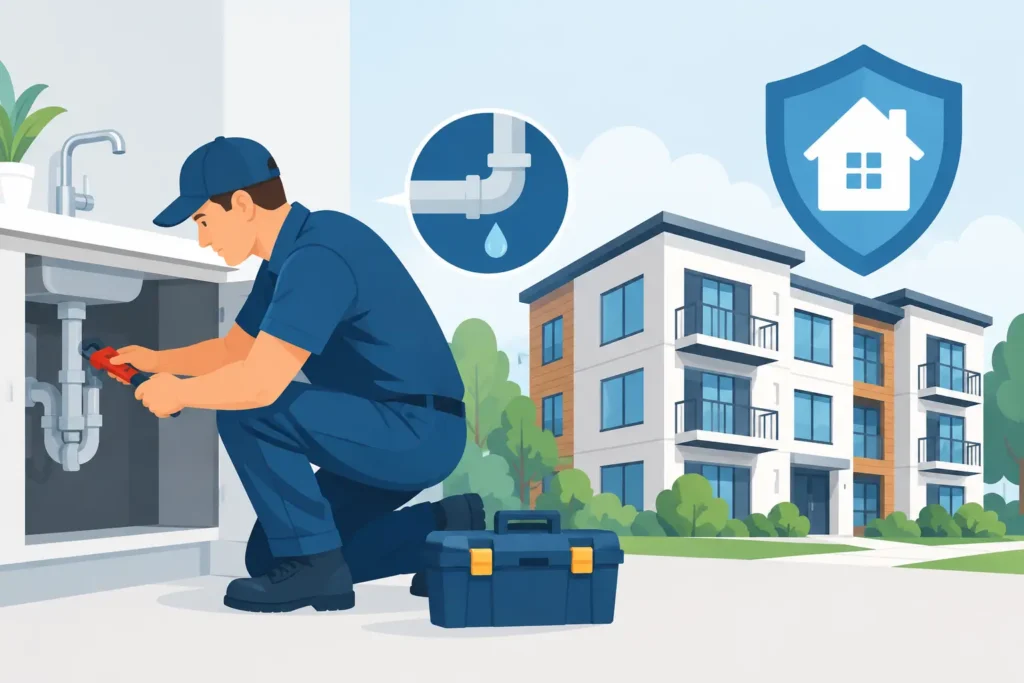
A tenant calls at 10 p.m. because the toilet is overflowing. Another reports that the water heater is cold before a busy workday. For rental owners, plumbing services for landlords are not just a maintenance expense. They protect the property, help keep tenants safe and comfortable, and prevent a manageable repair from becoming an expensive restoration project.
The right response depends on the problem, the age of the building, and whether water, sewage, or gas is involved. What should not depend on the situation is having a qualified local plumber ready to investigate the real cause and explain the repair clearly.
Why Plumbing Problems Need Fast Attention in Rentals
A small leak behind a wall can damage drywall, flooring, cabinets, and framing long before anyone sees water on the floor. A slow sewer drain can become a backup that makes part of the home unusable. Even a running toilet can raise utility costs month after month while creating frustration for the tenant.
Rental plumbing also affects more than one household decision. Owners need to coordinate access, communicate with tenants, document the condition of the property, and make repairs that will hold up under regular use. A quick patch may seem less costly at first, but repeat service calls and property damage often cost more than correcting the underlying issue.
For landlords and property managers in Monterey County, fast local service matters especially when a problem threatens habitability or could spread to another unit. Water should be shut off when necessary, tenants should be given clear instructions, and the repair should start with a proper diagnosis rather than guesswork.
Plumbing Services for Landlords That Cover the Common Risks
A reliable plumbing contractor should be able to handle both urgent calls and planned maintenance. Rental properties need more than a plumber who can replace a washer or unclog a sink. Older homes, multi-unit buildings, and high-use rentals can develop problems in drain lines, sewer mains, concealed water piping, gas lines, and water-heating equipment.
Emergency leaks and burst pipes
A burst supply line, failed angle stop, leaking water heater, or broken pipe can release a surprising amount of water in minutes. The first priority is limiting damage. If it is safe to do so, shut off the fixture valve or the home’s main water supply, move belongings away from wet areas, and contact a plumbing professional for immediate help.
The visible leak is not always the complete problem. A plumber should inspect nearby connections, pressure conditions, and affected materials to determine why the failure happened. That helps owners avoid repairing one weak connection while another is ready to fail.
Drain cleaning and sewer main clearing
Repeated clogs are a warning sign, particularly when several fixtures drain slowly or a toilet gurgles as a tub empties. Those symptoms may point to a blockage farther down the line, not a simple clog at one fixture. Grease, wipes, hair, scale buildup, roots, and damaged piping can all restrict drainage.
Professional drain cleaning and sewer main clearing are useful when the issue is recurring or affecting multiple areas of the property. The right approach depends on the pipe condition and the source of the blockage. Clearing the line may restore flow, but a damaged or root-infiltrated sewer line may need repair to stop the problem from returning.
Hidden water leak detection and repair
Not all water leaks announce themselves with a puddle. A higher water bill, musty odor, peeling paint, warm spots on a floor, or a water meter that continues moving when fixtures are off may indicate a concealed leak. Waiting for more obvious damage is rarely the best strategy.
Leak detection allows the plumber to narrow down the source before opening walls or floors unnecessarily. Once the source is confirmed, the repair can be planned around the least disruptive, most dependable solution for the property. This is especially valuable for occupied rentals, where protecting the tenant’s living space and minimizing downtime are both priorities.
Water heater repair and replacement
No hot water is an urgent inconvenience for tenants, but warning signs often appear earlier. Rust-colored water, rumbling sounds, inconsistent temperatures, leaks at the base of the unit, or an aging tank deserve attention before a complete failure.
A repair can make sense when the unit is relatively new and the issue is isolated. Replacement may be the better long-term decision when a tank is near the end of its service life, has significant corrosion, or is failing repeatedly. A licensed plumber can help assess capacity, fuel type, venting, code requirements, and installation needs so the replacement fits the home and its occupants.
Toilets, faucets, and fixture repairs
A dripping faucet, loose toilet, faulty fill valve, or worn shower cartridge may not be an emergency, yet small fixture problems can become costly when they are ignored. Toilets that run continuously waste water. A loose toilet can damage the floor around its base. A failing shower valve can lead to a tenant complaint at the worst possible time.
Fixture repairs and replacement are also an opportunity to improve durability. Rental-grade fixtures should be practical, serviceable, and suited to the property. The lowest-priced option is not always the best value if it requires frequent replacement or creates repeat maintenance calls.
Gas line work
Gas piping requires qualified, licensed work. If tenants smell gas, hear a hissing sound near a gas appliance, or suspect a gas leak, they should leave the area, avoid using switches or flames, and contact the gas utility or emergency services as appropriate. Do not attempt a repair yourself.
For planned appliance installations, extensions, or gas line repairs, professional installation helps protect occupants and the property. Proper sizing, connections, testing, and compliance are essential.
How Landlords Can Reduce Plumbing Emergencies
Plumbing emergencies cannot be eliminated, but a few practical habits reduce the odds of major damage. Check vacant units for leaks, test shutoff valves, inspect water heater areas, and address slow drains before they become backups. After tenant turnover, verify that toilets flush properly, faucets do not drip, and drains flow freely.
Clear communication also matters. Tenants should know where to report a leak, what qualifies as an urgent issue, and what not to put down drains or toilets. A simple reminder about grease, wipes, paper towels, and hygiene products can prevent many avoidable sewer calls. For properties with mature landscaping, periodic attention to sewer lines may be worthwhile because root intrusion is common in older pipe systems.
It is also smart to keep records of repairs, equipment age, and recurring issues. If the same bathroom has needed repeated drain cleaning, or the same ceiling has shown signs of moisture more than once, treat that pattern as useful information. It may be time for a deeper inspection instead of another temporary repair.
Choosing a Plumber for Rental Properties
Landlords need more than an available contractor. Look for a plumber who is licensed and insured, communicates directly, provides clear estimates, and can respond when the situation cannot wait. Experience with sewer lines, hidden leaks, water heaters, drain systems, and gas piping is important because rental issues do not always stay within one simple service category.
Scheduling and communication are equally valuable. Tenants need to know when to expect a technician, and owners need an understandable explanation of what was found, what was repaired, and whether there are risks to monitor. For larger repairs, ask about the repair options, expected disruption, and the likely consequence of delaying the work.
RS Plumbing provides local residential and commercial plumbing support throughout Seaside, Monterey County, and nearby communities, with 24/7 emergency availability, free estimates, and licensed, insured workmanship. For landlords managing an occupied unit, a vacant turnover, or a sudden after-hours problem, having a direct local contact can remove unnecessary delay.
When water is where it should not be, a drain backs up, or a tenant loses hot water, acting early protects more than the plumbing. It protects the condition of the rental, the relationship with the tenant, and the value of the property you worked hard to build.

Pingback: When Water Heater Replacement Is the Right Move – RS PLUMBING
Pingback: Burst Pipe Repair Steps That Limit Water Damage – RS PLUMBING