
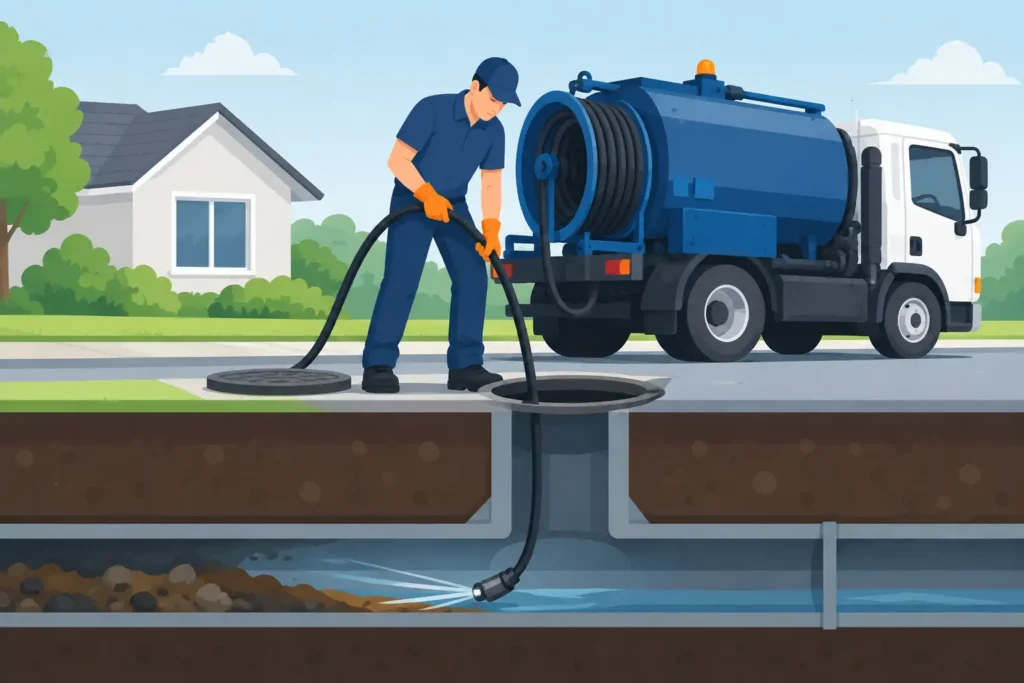
A sewer backup rarely starts as a dramatic emergency. It may begin with a toilet that bubbles when the shower drains, a kitchen sink that empties slowly, or a floor drain that gives off an unpleasant odor. When several fixtures are affected at once, the problem may be beyond a single drain. A professional sewer main clearing service can identify the blockage, restore proper flow, and help protect your home or business from wastewater damage.
For property owners in Seaside, Monterey County, and nearby communities, acting early can make a major difference. A blocked sewer main can interrupt daily routines, damage flooring and walls, create sanitation concerns, and force a business to close areas that customers or staff need to use.
What a Sewer Main Clearing Service Addresses
Your sewer main is the primary pipe that carries wastewater from your building to the public sewer connection or septic system. Every toilet, sink, shower, tub, washing machine, and commercial fixture depends on it. When that line becomes restricted or blocked, wastewater has nowhere to go but back toward the property.
A sewer main clearing service is designed for blockages that affect the main line, not just one fixture. A professional plumber evaluates the symptoms, locates the likely source of the restriction, and uses the appropriate equipment to clear the line without taking unnecessary risks with the piping.
The right approach depends on the cause. A buildup of grease, soap residue, paper products, or debris may respond well to professional drain-cleaning equipment. Tree roots entering an older sewer line require a different method. A damaged, shifted, or collapsed pipe may clear temporarily but still need repair or replacement to stop the problem from returning.
That distinction matters. Clearing a line restores flow. It does not automatically correct a pipe that has been compromised underground.
Signs the Main Sewer Line May Be Clogged
One slow sink can be a localized drain issue. Multiple plumbing fixtures acting up together is a stronger warning that the main sewer line needs attention. Watch for toilets that gurgle or rise when another fixture drains, water backing up into a shower or tub, repeated clogs in different bathrooms, or wastewater appearing at a floor drain.
Outside, you may notice a sewer odor near the building, unusually wet areas in the yard, or a cleanout pipe that releases water when fixtures are used. In a commercial setting, backups near restrooms, kitchen areas, janitor sinks, or floor drains should be handled quickly. Delaying service can expose staff, tenants, customers, and the property itself to a much larger cleanup.
Do not keep flushing or running water to test the problem. Every gallon sent down the drain can add to a backup. If wastewater is already coming up inside, stop using water fixtures where possible and request professional help right away.
Why Main Sewer Lines Clog
Main line blockages are often the result of gradual buildup, but some appear suddenly after years of hidden pipe wear. Older properties may have aging materials, previous repairs, offset joints, or pipe sections that have settled over time. Monterey County properties can also have mature landscaping, and roots naturally seek moisture around tiny openings in sewer pipes.
Common causes include:
- Tree roots growing into joints, cracks, or deteriorated pipe sections
- Cooking grease, wipes, hygiene products, and other materials that do not break down properly
- Scale, sludge, and debris accumulating inside older pipes
- Broken, bellied, shifted, or collapsed sewer piping
- Heavy use in rental, hospitality, retail, and other commercial properties
It is tempting to reach for a store-bought chemical drain cleaner when drains slow down. For a suspected sewer main problem, that is usually not the best answer. Chemicals may not reach the actual blockage, can be hazardous to handle, and may damage certain pipe materials. They also do nothing to diagnose roots, structural damage, or a recurring obstruction farther down the line.
How Professional Clearing Protects Your Property
Professional sewer clearing starts with the symptoms and the condition of the property. A plumber may access the sewer line through an exterior cleanout, use mechanical cable equipment to break through a blockage, or recommend camera inspection when recurring issues or pipe damage are suspected.
A sewer camera inspection is especially useful when the line has backed up more than once. It can show whether roots are present, whether the pipe has cracks or separated joints, and whether there is a low area where waste repeatedly collects. This information helps avoid guesswork and supports a repair recommendation only when one is actually needed.
For some lines, high-pressure water cleaning may be appropriate to remove heavy buildup from the pipe walls. For others, mechanical clearing is the safer choice. The equipment and method should fit the line material, the type of blockage, and the condition of the pipe. Fast service is valuable, but careful work matters just as much when the goal is to protect the property rather than create a temporary fix.
What to Do Before Help Arrives
If you believe the main sewer line is blocked, limit water use immediately. Avoid flushing toilets, taking showers, running the dishwasher, or starting laundry. If the backup is isolated to one bathroom or area, keep people away from contaminated water and do not attempt to push it back down the drain.
If it is safe to do so, make a note of what happened first. For example, identify whether the backup started after laundry drained, whether more than one fixture is affected, and whether the problem has occurred before. This gives the plumber useful context when diagnosing the line.
Property managers and business owners should also consider the operational impact. A restroom backup may require closing an area, notifying tenants, or directing customers away from affected facilities. Prompt action can help reduce disruption and prevent wastewater from spreading into finished spaces.
Clearing Versus Sewer Line Repair
Not every main line clog requires excavation or replacement. In many cases, professional clearing removes the obstruction and the line continues to perform well. If the blockage was caused by an isolated buildup, clearing may be the complete solution.
However, repeated backups are a signal to look deeper. Roots often return if they can enter through a crack or failed joint. A pipe that has shifted, collapsed, or developed a belly can keep collecting debris even after it has been cleared. In those situations, repair may be the more cost-effective decision because it addresses the source of recurring service calls and potential water damage.
A dependable plumber should explain what was found, what can be cleared now, and whether there is evidence that repair is needed. Property owners deserve a plain explanation of the options, expected work, and next steps before making a decision.
Preventing Future Main Line Problems
Good habits reduce many avoidable blockages. Keep grease, coffee grounds, food scraps, wipes, paper towels, feminine products, and hygiene products out of drains and toilets. Only toilet paper and human waste belong in the toilet, even when a product is marketed as flushable.
For buildings with older sewer lines or large trees near the route of the pipe, scheduled inspection and maintenance can be worthwhile. The right timing depends on the line’s history, pipe material, landscaping, and how heavily the property is used. A busy restaurant, rental property, or office building may need a different maintenance plan than a single-family home.
RS Plumbing provides direct local sewer and drain support for homeowners, landlords, property managers, and businesses throughout the Seaside and Monterey County area. With 24/7 emergency availability, licensed and insured workmanship, free estimates, and 15 years of professional experience, the focus is on finding the cause and giving property owners a clear path forward.
A main sewer problem is not the time to wait for a minor symptom to become a contaminated backup. If several drains are slowing, gurgling, or sending water in the wrong direction, arrange an evaluation before the next flush or load of laundry turns a manageable blockage into property damage.

Pingback: What Is Commercial Plumbing for Local Businesses? – RS PLUMBING
Pingback: How to Prevent Sewer Backups at Your Property – RS PLUMBING
Pingback: Toilet Replacement Installation Service You Can Trust – RS PLUMBING
Pingback: Commercial Plumbing Maintenance Plans That Prevent Shutdowns – RS PLUMBING
Pingback: Commercial Plumbing Services That Keep Doors Open – RS PLUMBING