
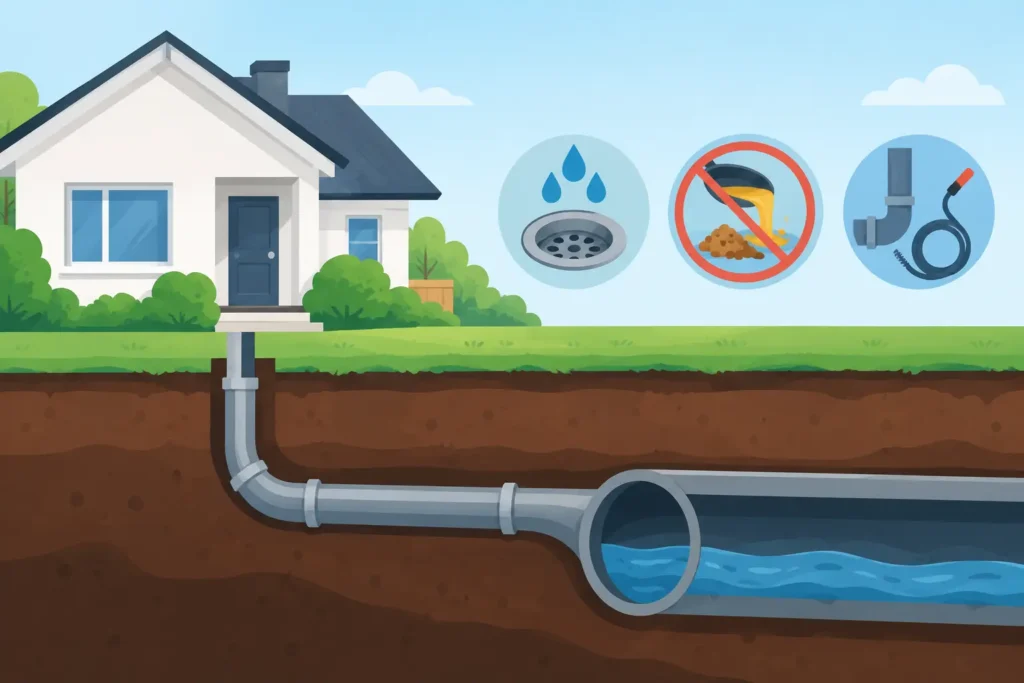
A sewer backup rarely starts with water on the floor. It often begins with a slow tub drain, a toilet that gurgles after flushing, or a floor drain that smells musty after a busy weekend. Knowing how to prevent sewer backups means responding to those early warnings before wastewater comes back through a drain, toilet, or cleanout.
For homeowners, landlords, and business owners, prevention protects more than pipes. It helps avoid damaged flooring, lost business hours, sanitation concerns, tenant complaints, and emergency repair costs. Some causes are within your control, while others – such as roots in the sewer lateral or an issue in a public main – require professional diagnosis. The goal is to keep the private sewer line moving freely and identify trouble before it becomes an emergency.
Know What Causes a Sewer Backup
A building’s drains connect to a main sewer line, often called a sewer lateral, that carries wastewater away from the property. When that line is blocked, damaged, or overwhelmed, wastewater has nowhere to go. It can rise through the lowest open fixture, which may be a shower, bathtub, floor drain, or ground-level toilet.
In Monterey County, tree roots are a frequent concern for older sewer lines. Roots are drawn to moisture and can enter through small gaps, loose joints, or aging pipe connections. Once inside, they expand and catch paper, grease, and other debris until the line narrows or closes.
Grease buildup is another common cause. Cooking oil may look harmless when poured down a warm sink drain, but it cools and sticks to pipe walls farther down the line. Over time, grease combines with food particles and soap residue to form a difficult blockage. In commercial kitchens, a poorly maintained grease interceptor can create the same problem on a larger scale.
Other causes include flushed wipes, hygiene products, excessive toilet paper, foreign objects, pipe deterioration, ground movement, and heavy rain that overloads a municipal sewer system. The right preventive step depends on the actual cause. Repeatedly using a drain cleaner on a structural pipe problem will not repair the line.
How to Prevent Sewer Backups With Better Drain Habits
The simplest protection starts with what enters the plumbing system. Toilets should handle human waste and toilet paper only. Even products labeled “flushable” can remain intact long enough to catch on roots, buildup, or imperfections in the sewer line. Keep wipes, paper towels, cotton products, dental floss, diapers, and cleaning cloths out of the toilet.
In kitchens, collect cooled cooking grease in a container and dispose of it in the trash. Scrape plates into the garbage before washing them. A garbage disposal can process small food remnants, but it is not designed to carry large amounts of rice, pasta, coffee grounds, eggshells, fibrous vegetables, or grease through the sewer line.
Shower and bathroom drains need attention too. Use hair catchers where appropriate and remove visible hair regularly. Soap residue and hair usually cause local drain clogs rather than a main sewer backup, but repeated neglect adds strain to the system and can hide an emerging main-line issue.
Avoid treating chemical drain openers as routine maintenance. These products may provide limited relief for a small clog, but they can be ineffective against roots, heavy grease, or a collapsed pipe. Strong chemicals can also create a hazard for anyone who later services the drain. If a drain repeatedly slows down, a professional cleaning and camera inspection provide a clearer answer.
Pay Attention to Warning Signs
A single slow bathroom sink may be a small fixture clog. Several drains slowing down at once are more concerning because they can point to a blockage in the main sewer line. Do not wait for sewage to appear before arranging service.
Watch for toilets that bubble when a washing machine drains, tubs that fill when a toilet is flushed, or water collecting around a floor drain. These are signs that wastewater is struggling to pass through the main line. Sewage odors in the yard, unusually lush patches of grass, wet ground near the sewer route, or a damaged cleanout cap can also indicate a problem outside the building.
Property managers should encourage tenants to report these symptoms immediately instead of trying multiple store-bought products. A quick report can turn a planned drain cleaning into a much smaller job than an after-hours cleanup and restoration project.
Act Early When Multiple Fixtures Are Affected
When more than one fixture is backing up, stop using water wherever possible. Do not run the dishwasher, washing machine, showers, or additional toilet flushes. Each gallon sent down the drain can add to the backup inside the property.
Keep people and pets away from wastewater. Raw sewage can contain harmful bacteria and contaminants. If it has reached living areas or a commercial workspace, use appropriate cleanup precautions and arrange prompt professional help. A qualified plumber can clear the line, identify the cause, and advise whether further sanitation or restoration work is needed.
Maintain the Sewer Line Before It Fails
Scheduled maintenance is especially worthwhile for properties with mature trees, older plumbing, a history of recurring clogs, or high daily water use. A professional sewer cleaning removes buildup before it becomes a full obstruction. The best interval is not the same for every property. A newer home with no symptoms may need less frequent service than an older rental or restaurant with known root activity.
A sewer camera inspection is useful when backups return, when a home is being purchased, or when there is uncertainty about the condition of an older line. The camera can reveal root intrusion, separated joints, offset pipe sections, grease accumulation, or damage that cleaning alone cannot solve. It helps avoid guessing and supports a repair plan based on what is actually inside the pipe.
For root-prone lines, periodic professional root removal may keep the line functioning while you plan a longer-term repair. That is a maintenance strategy, not a permanent cure. If roots repeatedly enter through broken or separated pipe, repairing or replacing the damaged section is generally the more reliable way to protect the property.
Protect Outdoor Sewer Components
Locate the sewer cleanout and keep it accessible. The cleanout is a capped pipe that allows a plumber to inspect and clear the sewer line without removing a toilet or working through an interior drain. It should not be buried under landscaping, blocked by storage, or sealed in a way that prevents access.
Walk the exterior of the property after heavy rain and periodically throughout the year. Look for pooling water, sewer odors, settling soil, or wet areas near the line route. These conditions do not always mean the sewer is failing, but they are worth investigating when they appear with slow drains or gurgling fixtures.
If your building sits in a low area or has experienced backups during storms, ask a plumbing professional whether a backwater valve is appropriate. This device can help prevent sewage from a surcharged public sewer from flowing backward into the property. It is not a replacement for clearing a clogged private line, and it requires correct installation and maintenance. For the right property, however, it can be valuable protection.
Commercial properties should also make sure employees know where floor drains and cleanouts are located. Restaurants, offices, retail spaces, and hospitality properties benefit from a simple response plan: who reports a drainage issue, who can limit water use, and who contacts a qualified plumber after hours.
Choose Repairs That Address the Root Cause
A cleared sewer line is good news, but it is not always the end of the job. If the line was blocked by a one-time buildup, improved habits and periodic maintenance may be enough. If a camera shows cracked pipe, significant root intrusion, a belly in the line, or failed connections, the property needs a repair discussion.
A professional should explain what was found, where it is located, and whether a targeted repair or a larger replacement is the sensible option. The least expensive immediate choice is not always the lowest-cost choice over time, particularly when recurring backups threaten finished spaces, tenant operations, or customer-facing areas.
RS Plumbing provides sewer main clearing, camera-informed diagnosis, and sewer line repair for property owners throughout Seaside and the wider Monterey County area. With direct local service and 24/7 emergency response, the focus is on stopping the immediate problem and helping you make a clear decision about the next step.
A sewer backup is one of those problems that becomes more expensive the longer it is ignored. If drains are slowing, fixtures are gurgling, or wastewater is appearing where it should not, treat it as an early call for help – before a small warning becomes damage inside your property.
