
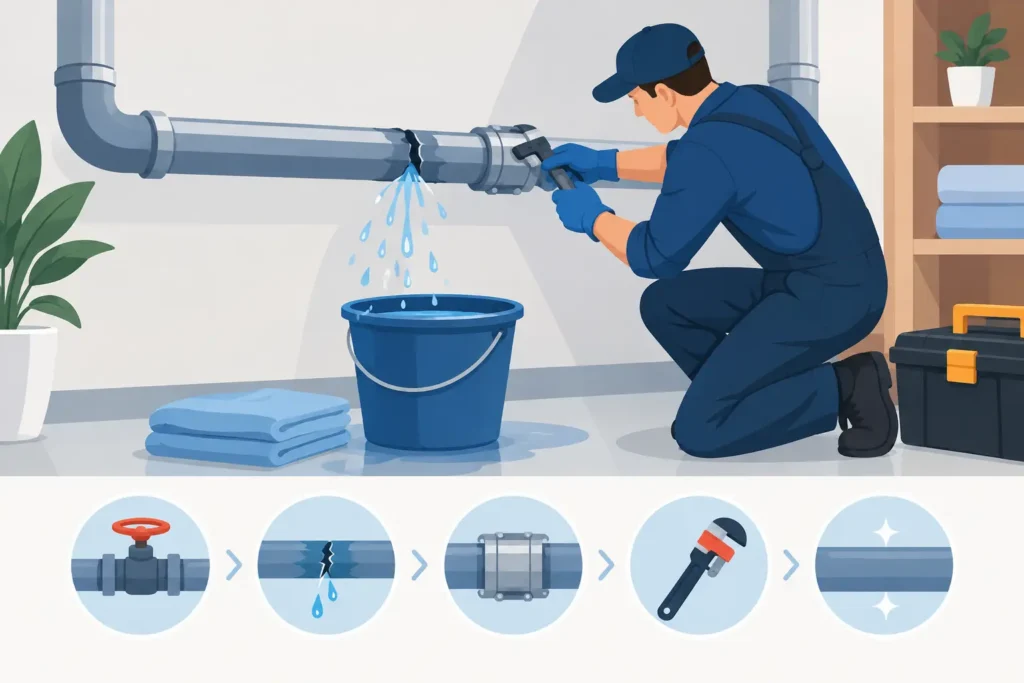
A burst pipe can release a surprising amount of water in minutes. Whether it happens behind a bathroom wall, beneath a kitchen sink, in a crawl space, or above a commercial ceiling, burst pipe repair starts with limiting the water damage before it spreads to flooring, cabinets, drywall, inventory, or electrical systems.
The right response is fast but controlled: shut off the water, protect the area if it is safe to do so, and call a licensed plumber for emergency service. A temporary patch may slow a drip, but a pipe that has split, corroded through, or failed at a fitting needs a proper repair to prevent another leak.
What to Do When a Pipe Bursts
Your first priority is stopping the water flow. Find the main water shutoff valve for the property and turn it clockwise. In many homes, it is near the water meter, garage, exterior wall, or where the main line enters the building. For a localized leak under a sink or behind a toilet, the fixture shutoff valve may be enough. If water is moving quickly or you cannot identify the source, shut off the main supply.
Next, turn off the water heater if the main water supply is off. This helps protect the unit from operating without adequate water. For a gas water heater, use the setting recommended on the unit or contact a professional if you are unsure. Do not attempt gas-line work yourself.
Move furniture, electronics, documents, merchandise, and other valuables away from the affected area. Place towels, buckets, or a shallow container under an accessible leak. If water is near outlets, light fixtures, an electrical panel, or appliances, do not enter the area or touch electrical equipment. Shut off power only if you can do so safely from a dry location, then wait for qualified help.
Take photos or video once the immediate hazard is under control. Clear documentation can be useful for property records and insurance claims, especially when water has reached walls, ceilings, finished flooring, or business equipment.
Do Not Rely on a Quick Patch
Tape, pipe clamps, epoxy products, and rubber repair sleeves can sometimes reduce water loss until a plumber arrives. They are not a dependable long-term solution for a burst line. Pressure, corrosion, temperature changes, and movement in the pipe can cause a temporary repair to fail without warning.
Avoid cutting into walls, removing pipe sections, or using open flame near plumbing. The visible break is not always the entire problem. A pipe may have frozen in multiple places, or a corroded line may have thin spots beyond the section that first leaked.
When Burst Pipe Repair Cannot Wait
Every burst pipe deserves prompt attention, but some situations require emergency service right away. Water coming through a ceiling, pooling near electrical components, flooding a crawl space, or entering a business area can cause damage that grows by the hour. Landlords and property managers should also act quickly when a leak affects more than one unit or interrupts water service for tenants.
Commercial properties have additional concerns. A leak in a restaurant, office, retail space, hotel, or rental property can disrupt operations, create slip hazards, and damage stock or equipment. Fast isolation of the damaged line can reduce downtime while a plumber determines the safest repair approach.
RS Plumbing provides 24/7 emergency plumbing support for property owners in Seaside, Monterey County, and nearby communities. With a licensed and insured plumber on the job, you receive clear communication about the source of the failure, the repair needed, and any additional water-damage concerns found along the way.
How a Professional Finds the Real Cause
A burst pipe is often the final symptom, not the original cause. The repair should address both the damaged section and the condition that led to the failure.
Frozen water inside a pipe is a common cause during cold weather. As water freezes, it expands and puts pressure on the pipe walls. The split may not become obvious until temperatures rise and water begins flowing again. Exposed pipes in garages, crawl spaces, exterior walls, and unheated areas are especially vulnerable.
Older galvanized steel piping can corrode from the inside out. What appears to be a sudden break may be the result of years of mineral buildup and thinning pipe walls. Copper, PEX, and other materials can also fail because of poor connections, physical damage, excessive water pressure, shifting foundations, or faulty installation.
A professional inspection may include checking nearby joints, valves, supply lines, pressure conditions, and accessible portions of the plumbing system. If the leak is hidden, leak detection methods can help locate the problem without unnecessary demolition. This matters because repairing only the wettest visible spot can leave another weak section behind the wall or below the floor.
Choosing the Right Burst Pipe Repair
The best repair depends on the pipe material, location, extent of damage, and overall condition of the plumbing. A small, isolated split in newer piping may be resolved by removing the damaged section and installing new pipe with properly fitted connections. When corrosion affects a longer run, replacing only one small section may be less cost-effective than replacing the compromised line.
Accessibility also affects the work. A leak under a sink is generally easier to reach than one beneath a slab, inside a wall, or above a finished ceiling. A careful plumber will explain what needs to be opened for access and work to protect surrounding finishes whenever possible. In some cases, a targeted opening is the most responsible way to make a permanent repair and confirm the area is dry.
For older properties, a burst pipe can be a useful warning sign. If repeated leaks, rust-colored water, low pressure, or deteriorated galvanized lines are present, ask whether a planned repipe or section replacement would reduce future emergency calls. The right choice depends on the system’s condition and your budget, not on selling more work than the property needs.
Drying the Area Matters After the Plumbing Is Fixed
Stopping the leak is essential, but it is not the final step. Moisture trapped in drywall, insulation, wood framing, cabinets, or flooring can lead to swelling, staining, odors, and mold growth. Remove standing water promptly and use appropriate drying equipment or water-damage professionals when the affected area is large or materials are saturated.
Watch ceilings for sagging, bubbling paint, or spreading stains. Do not assume a ceiling is safe simply because the water flow has stopped. Water can remain trapped above the surface and release later. For rental and commercial properties, document the repair, affected areas, and follow-up steps for maintenance records.
Before walls or ceilings are closed, confirm the repaired line has been tested and that the surrounding materials are sufficiently dry. This reduces the risk of covering up a slow leak or moisture problem that could become costly later.
Preventing Another Pipe Failure
No property can eliminate every plumbing emergency, but a few practical steps lower the risk. Insulate exposed pipes in cold areas, disconnect and drain exterior hoses when freezing temperatures are expected, and keep cabinet doors open during cold spells so warm indoor air can reach pipes under sinks.
Know where the main shutoff valve is before an emergency happens. Make sure household members, staff, or an on-site manager know how to use it. If the valve is difficult to turn, leaking, or inaccessible, have it inspected before you need it.
Pay attention to smaller warning signs: recurring drips, water stains, reduced water pressure, banging pipes, discolored water, or unexpectedly high water bills. These issues do not always mean a pipe is about to burst, but they justify a professional evaluation. Catching a hidden leak or deteriorating pipe early is usually far less disruptive than responding to a flooded room at night.
When water is where it does not belong, time matters. Shut off the supply, keep people safe, and get a qualified local plumber involved before a damaged pipe becomes a larger property repair.

Pingback: How Water Leaks Cause Costly Property Damage – RS PLUMBING