
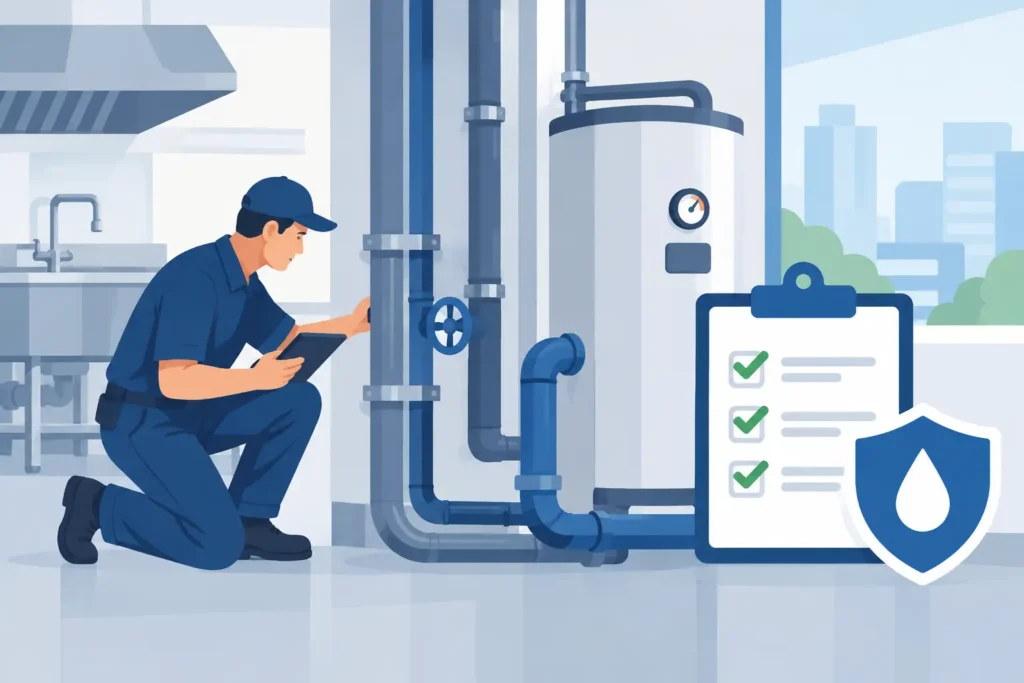
A restroom closure during a lunch rush, a sewer backup in a tenant space, or a water heater failure before hotel check-in can disrupt far more than plumbing. Commercial plumbing maintenance plans give business owners and property managers a practical way to find developing problems before they force a shutdown, damage property, or create an unpleasant experience for customers and staff.
For facilities in Seaside, Marina, Salinas, Carmel, Pacific Grove, and across Monterey County, the right plan should reflect how the building is actually used. A busy restaurant, a small office, a retail center, and a multi-unit rental property do not put the same demand on drains, fixtures, water heaters, and sewer lines. Scheduled service works best when it is built around those differences, not treated as a one-size-fits-all checklist.
What Commercial Plumbing Maintenance Plans Should Cover
A useful maintenance plan starts with a clear picture of the property. That means identifying the main water shutoff, sewer cleanouts, water heaters, gas piping, restroom groups, kitchen drains, exterior hose connections, and any older or recurring problem areas. It also means reviewing prior repairs. A drain that clogs every few months, for example, may point to grease buildup, root intrusion, pipe damage, or an improperly sloped line rather than a simple blockage.
From there, service can be scheduled monthly, quarterly, semiannually, or annually. High-use properties generally need more frequent attention. A restaurant with grease-producing kitchen equipment may require regular drain cleaning, while a professional office may benefit from periodic inspections and fixture checks. The goal is not to perform work that is unnecessary. It is to catch predictable wear before it becomes an emergency call.
A commercial plumbing maintenance visit may include inspection of visible supply lines and drain connections, testing toilets and faucets, checking water pressure, looking for signs of hidden leaks, assessing water heater performance, and confirming that cleanouts and shutoff valves remain accessible. Where drain history or building use warrants it, drain cleaning or sewer camera inspection can be added to identify buildup, root intrusion, breaks, or offsets below the surface.
The Problems That Cost Businesses the Most
Small leaks are easy to overlook in commercial buildings. A slow leak beneath a sink, behind a wall, or near a water heater can waste water for weeks and damage cabinets, flooring, drywall, or adjacent tenant spaces. On properties with multiple suites or units, locating the source quickly matters because water can travel well beyond the point of failure.
Drain and sewer issues can be even more disruptive. Repeated backups in a restroom or floor drain are not normal operating conditions. They may be caused by wipes, paper products, grease, scale, roots, or damage in the main line. Clearing the immediate blockage restores use, but a maintenance plan should also look at why the issue keeps coming back. Camera inspection can be especially valuable when a property has older piping, frequent clogs, or limited records of past sewer work.
Water heater problems deserve the same attention. Commercial water heaters and high-demand residential-style systems serving rentals can lose efficiency, develop leaks, or fail without much warning. Sediment buildup, failing valves, corroded connections, and inconsistent temperature should be addressed before tenants or customers are left without hot water.
Gas piping also requires professional attention when a building is being remodeled, equipment is added, or a leak is suspected. Gas line work is not a maintenance item to postpone or handle casually. Proper installation, inspection, and repair protect the building and the people inside it.
How Often Should Service Be Scheduled?
The honest answer is that it depends on the property. Usage, building age, plumbing materials, tenant behavior, equipment, and the history of prior repairs all matter. A maintenance schedule should fit the risk, not simply follow a calendar.
Restaurants, cafes, hospitality properties, medical offices, salons, gyms, and multi-tenant commercial buildings often benefit from quarterly service. These properties have frequent restroom use, high water demand, or drains that handle soap, food debris, hair, or other material likely to create buildup. Restaurants may need drain cleaning more often depending on kitchen activity and grease management practices.
Small offices, retail locations, and low-occupancy professional spaces may be well served by a semiannual or annual inspection, provided they do not have recurring issues. Even in a lower-use building, annual testing of fixtures, shutoffs, visible piping, and water heating equipment can identify concerns before they grow.
After a major repair, sewer line replacement, water heater installation, or tenant turnover, an additional check can be worthwhile. This is particularly true when the building has experienced a backup, hidden leak, or water damage claim. A little extra oversight after a disruption can help confirm that the underlying issue was resolved.
A Plan Should Include Clear Records and Straight Answers
Maintenance only helps when the property owner knows what was found and what needs attention next. Each visit should produce clear communication about completed work, observed conditions, recommended repairs, and any time-sensitive risks. Property managers need information they can act on, especially when budgets, tenants, and owners are involved.
A professional plumber should distinguish between urgent repairs and items that can be planned. A leaking shutoff valve serving an occupied suite may need prompt repair. A faucet that is beginning to wear but still operates safely may be scheduled with other fixture updates. This approach helps avoid unnecessary disruption while keeping important work from being ignored.
Good records are also useful when ownership changes, a tenant reports a recurring problem, or an insurance question arises. Knowing when a sewer was cleared, when a water heater was serviced, or when a leak was repaired gives decision-makers a better starting point than guesswork.
Build a Plan Around Your Building, Not a Generic Checklist
Before setting up service, walk through the property with a plumbing professional and discuss the issues that affect operations. Identify the bathrooms customers use, the drains employees rely on, the equipment that requires hot water or gas, and the areas where a leak would cause the greatest damage. For a retail shop, that may be a restroom near inventory. For a rental property, it may be stacked bathrooms or shared sewer lines. For a restaurant, the kitchen drainage system is often the first priority.
It also helps to decide who can authorize emergency work and who should receive maintenance updates. When a pipe bursts after hours or a sewer line backs up during business operations, delays in approval can make property damage worse. Keep shutoff locations documented and make sure managers know when to call for help rather than attempting a temporary repair.
RS Plumbing provides tailored commercial plumbing support backed by 15 years of experience, licensed and insured workmanship, and 24/7 emergency response for local property owners. Whether the concern is drain cleaning, sewer main clearing, hidden leak detection, water heater service, fixture repair, or gas line work, the right next step is a direct assessment of the building and its actual needs.
A maintenance plan cannot prevent every plumbing emergency. Pipes can fail unexpectedly, tenants can put the wrong material down a drain, and storms or aging infrastructure can expose a problem quickly. But when your building has been inspected, documented, and maintained by a qualified local plumber, you are far less likely to face a surprise with no clear path forward. Schedule service before the next busy day puts your plumbing to the test.

Pingback: Gas Line Installation for Safer Properties – RS PLUMBING