
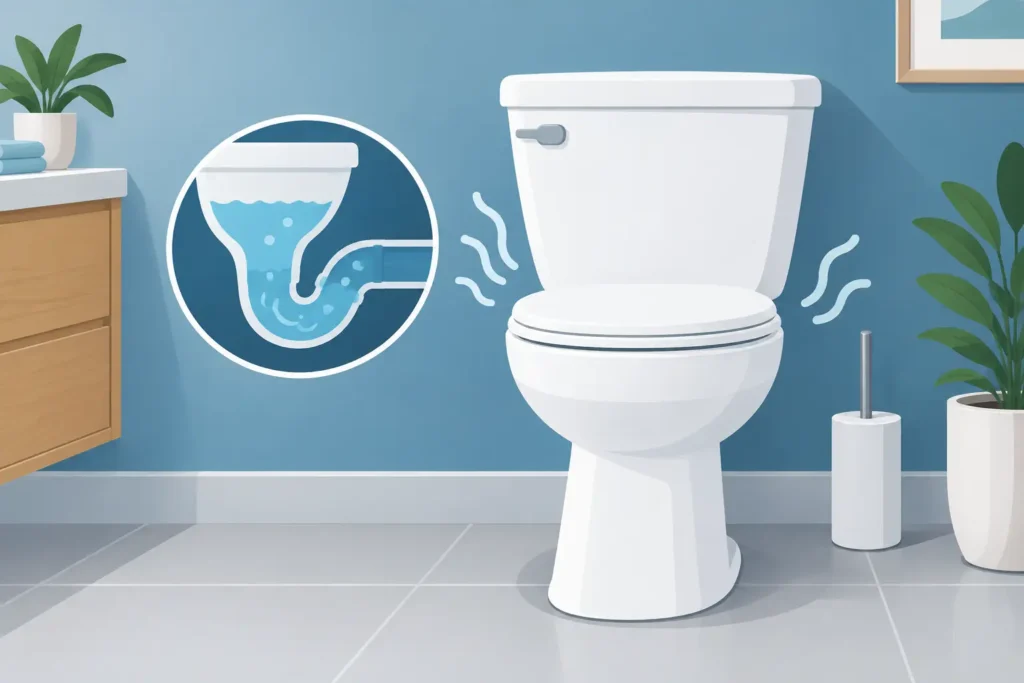
A toilet that gurgles after flushing, when the shower drains, or while a nearby sink is running is not simply making an odd noise. Toilet gurgling causes usually involve trapped air moving through a drain system that is partially blocked, poorly vented, or beginning to back up. The timing of that sound can help identify whether you are dealing with a fixture-level clog or a larger sewer problem.
A single gurgle may not mean an immediate emergency. Repeated gurgling, slow drains, changing toilet water levels, or wastewater coming up through a tub or shower drain deserve prompt attention. Waiting can turn a restricted drain into an overflow that damages flooring, walls, and personal property.
What Makes a Toilet Gurgle?
Your plumbing system needs water and air to flow correctly. When you flush, wastewater travels down the toilet drain and into a branch line or the main sewer line. Plumbing vents allow air into the system so water can move without creating a vacuum.
If a blockage restricts that flow, air may be forced back through the toilet trap instead. That movement creates the familiar bubbling or gurgling sound. The toilet is often not the source of the problem. It may simply be the most visible opening in the drainage system.
The right response depends on which fixtures are affected. A toilet that gurgles only when it is flushed can point to a localized obstruction. A toilet that gurgles when the washing machine drains or the shower runs is more likely connected to a shared drain or sewer-line issue.
Common Toilet Gurgling Causes
A Partial Toilet or Drain-Line Clog
Paper buildup, wipes, hygiene products, small objects, or too much material flushed at once can leave a partial blockage in the toilet trap or the drain line below it. Water may still go down, but not freely enough to keep air pressure balanced. You may notice a weak flush, a bowl that rises before draining, or gurgling after the water leaves.
A flange plunger can sometimes clear a simple toilet clog. Use steady, firm strokes and make sure the cup forms a full seal over the drain opening. If plunging does not improve the flush after several attempts, stop before the bowl overflows. Chemical drain cleaners are a poor solution for toilets and can damage plumbing components, create hazardous splash risks, and make professional repair harder.
A Blocked Main Sewer Line
A main sewer line carries wastewater from multiple fixtures to the public sewer or septic system. When that line is restricted by buildup, roots, a damaged pipe, or a collapsed section, water has nowhere to go. Air and wastewater can then find their way back through the lowest available fixture, which is often a shower, tub, floor drain, or toilet.
This is one of the more serious toilet gurgling causes because it can affect an entire home, rental unit, or commercial space. If the toilet bubbles when you run the sink, shower, laundry machine, or dishwasher, do not keep sending water into the system. A professional sewer main clearing service can locate and remove the obstruction before sewage backs up indoors.
A Clogged Plumbing Vent
A vent stack typically exits through the roof and allows sewer gases and air pressure to move safely out of the plumbing system. Leaves, nesting material, debris, or damage around the vent opening can restrict airflow. Without enough venting, a draining fixture can pull air through nearby toilet traps, causing gurgling and sometimes lowering the water level in the bowl.
Vent problems can look very similar to a drain clog. Roof access, vent routing, and local code requirements make this a job for a qualified plumber rather than a homeowner with a hose or improvised tool. Walking on a roof also adds an unnecessary safety risk.
Tree Roots in a Sewer Pipe
In Monterey County, mature landscaping can be a real benefit to a property, but roots naturally seek moisture and nutrients. Tiny cracks or loose joints in an older sewer line can attract roots, which continue growing inside the pipe. At first, the line may only drain slowly. Over time, roots catch toilet paper and waste until the line repeatedly clogs.
Roots are not usually solved by plunging or by a temporary drain-cleaning product. Clearing the line may restore flow, but a camera inspection can show whether the pipe needs repair or replacement to prevent the issue from returning. The best repair depends on the pipe material, depth, damage location, and condition of the remaining line.
Grease, Scale, or Debris in Shared Drains
Not every drain restriction begins at the toilet. Kitchen grease can harden inside drain pipes, soap residue can narrow bathroom lines, and mineral scale can build up over time. In commercial properties, food-service waste, frequent restroom use, and improper disposal can put extra strain on a shared sewer system.
Property managers and business owners should pay attention to patterns: recurring calls from the same restroom, slow drainage after busy periods, or multiple fixtures backing up at once. Early professional cleaning is typically less disruptive than an emergency closure, cleanup, and repair after an overflow.
When Gurgling Signals a Sewer Emergency
A gurgling toilet needs urgent service when it occurs with signs that wastewater is already backing up. Shut off water use in the affected area and avoid flushing again if you see any of these conditions:
- Water or sewage rising in a shower, tub, floor drain, or cleanout
- Multiple sinks, toilets, or drains running slowly at the same time
- Toilet water rising close to the rim or failing to return to its normal level
- A strong sewer odor indoors or outdoors near the drain line
If a backup is active, keep children, pets, and customers away from the affected area. Wastewater can contain harmful bacteria, and continued water use can increase the cleanup area quickly. For a commercial building, restricting restroom access early may protect the property and help avoid a larger operational disruption.
What You Can Check Before Calling a Plumber
Start by identifying which fixtures are involved. Flush the toilet once, then listen. If it gurgles only during that flush and nearby drains are normal, a toilet-level obstruction is possible. If the sound starts when another fixture drains, the problem is likely farther down the line.
Look for slow drainage in tubs, showers, and sinks, but do not repeatedly test fixtures if water is already backing up. Check whether the toilet bowl water is unusually high or low. A low bowl level can occur when air pressure pulls water through the trap, while a rising bowl often indicates a restriction below the toilet.
If you have a cleanout outside, do not open it during an active backup unless you understand the risk. A blocked sewer line can release wastewater through that opening under pressure. A licensed plumber has the equipment to assess the line safely, clear it properly, and determine whether the blockage is routine or related to pipe damage.
How Professional Drain and Sewer Service Helps
A proper diagnosis prevents wasted money on temporary fixes. A plumber may use a sewer machine to clear a blockage, then recommend a camera inspection if there are signs of roots, a broken pipe, recurring obstructions, or an offset joint. Camera work provides a direct view inside the line, helping distinguish a simple buildup from a repair issue.
For a toilet-specific problem, the toilet may need to be removed so the drain and fixture can be inspected correctly. If the issue is a blocked vent, the vent system must be evaluated without damaging roofing or plumbing components. The goal is not just to quiet the noise. It is to restore proper drainage and protect the building from another backup.
RS Plumbing provides local drain cleaning, sewer main clearing, sewer-line repair, and 24/7 emergency response for homeowners and businesses throughout Seaside and Monterey County. With licensed, insured workmanship and clear recommendations, the focus stays on the actual cause of the problem rather than a quick patch.
A gurgling toilet is your plumbing system asking for attention before it has to demand it. Acting while the drains are still moving can protect your property, keep a small repair manageable, and spare you the mess of a sewer backup.
