
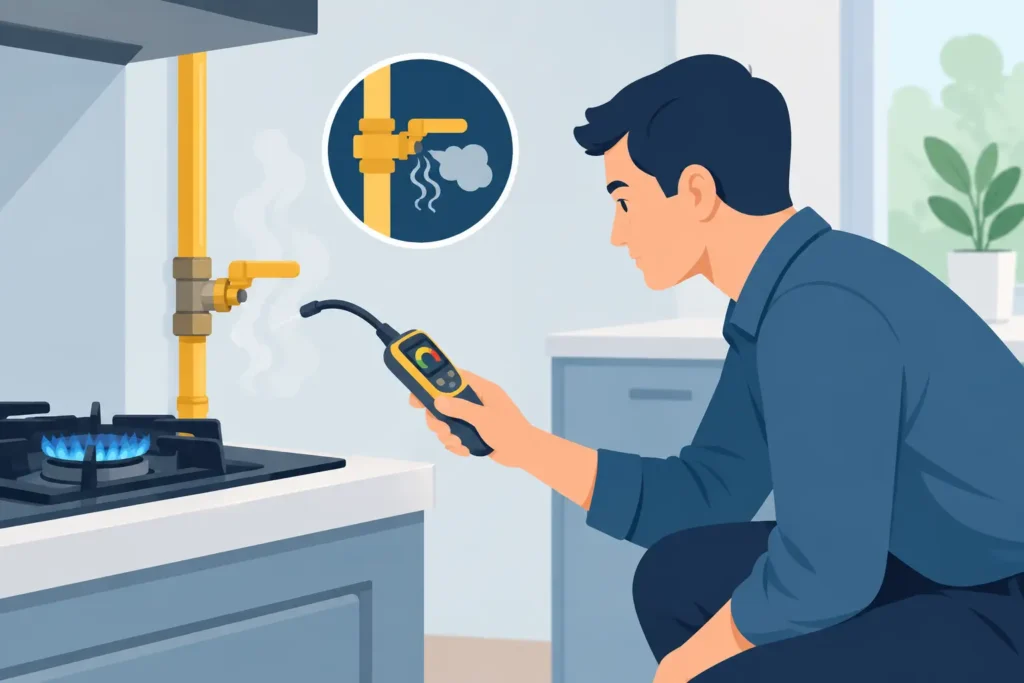
A natural gas leak can move from a faint, questionable odor to a serious safety emergency without much warning. Knowing how to identify gas leaks gives homeowners, landlords, and business owners time to protect people, property, and operations before the problem grows.
Natural gas is commonly used for water heaters, furnaces, ranges, dryers, fireplaces, and commercial equipment. The gas itself has no smell, so utility companies add a sulfur-like odorant to make leaks easier to notice. If something smells like rotten eggs, sulfur, or skunk spray near a gas appliance or gas line, treat it seriously.
How to Identify Gas Leaks Inside a Property
The most recognizable sign is a strong sulfur or rotten-egg odor. It may be obvious throughout a room, or it may only appear near a water heater, stove, furnace, dryer, fireplace, or gas meter. Do not assume a light odor means the leak is minor. Even a small leak needs prompt professional attention.
A hissing or whistling sound near a gas appliance, exposed pipe, regulator, or meter is another warning sign. Gas escaping under pressure can create audible noise, especially if the leak is at a fitting or damaged section of piping. Avoid getting close to investigate. The sound itself can tell you that the area is unsafe.
Physical symptoms can also be a warning, although they should never be used as the only way to judge whether gas is present. Headaches, dizziness, nausea, fatigue, or irritation can occur when someone is exposed to gases or when an appliance is not venting correctly. If several people feel unwell in the same building, leave the area and call for help from outside.
Pay attention to appliance performance as well. A gas burner that will not stay lit, a pilot light that repeatedly goes out, soot around an appliance, or flames that burn yellow instead of mostly blue can point to combustion or ventilation problems. These issues do not always mean there is a gas leak, but they do call for a qualified inspection. A poorly operating gas appliance can create carbon monoxide hazards even when there is no leak in the gas piping.
Outdoor Signs of a Gas Leak
Gas leaks are not limited to indoor appliances. A damaged underground gas line can create visible changes around the property. Watch for dirt or dust blowing from one spot, bubbling water in a puddle, or a persistent gas odor near the meter, foundation, driveway, or landscaping.
Dead or discolored grass in a small, unusual area can be another sign. Natural gas can displace oxygen in the soil and damage plants above an underground leak. Of course, brown grass can also come from irrigation trouble, pests, or heat. The concern is greater when damaged vegetation appears with a sulfur-like smell or a hissing sound.
If you smell gas outdoors near your building, do not dismiss it because the odor seems less concentrated. Wind can spread gas quickly, and the source may be closer than it appears. Keep people away from the area and contact the gas utility or emergency services from a safe location.
What to Do if You Suspect a Gas Leak
The first goal is simple: get people away from the suspected leak without creating a spark. Leave the building or area immediately. Help children, guests, tenants, customers, and anyone who may need assistance exit safely.
Do not turn lights on or off, unplug equipment, operate thermostats, use a garage door opener, or start a vehicle near the suspected leak. Do not use matches, lighters, cigarettes, candles, or any open flame. Even using a phone indoors can create an ignition risk, so wait until you are outside and a safe distance away before making calls.
Once you are safely outside, call 911 if there is an immediate danger, strong odor, fire risk, illness, or a major leak. Then contact your gas utility to report the suspected leak. Follow its instructions about re-entering the building. Do not go back inside to open windows, check an appliance, collect belongings, or try to locate the exact source.
Property owners sometimes ask whether they should shut off the gas valve. That depends on the situation and whether it can be done safely. If you have been trained on your property’s gas shutoff and can reach it without entering a hazardous area, follow your utility’s emergency guidance. Otherwise, leave the shutoff alone and wait for emergency responders or the utility technician.
What Not to Do to Find the Leak
Trying to track down a gas leak yourself can turn a manageable repair into a dangerous situation. Never use a flame to test fittings or pipes. This includes a lighter, match, or candle. A flame test is unsafe and can ignite leaking gas.
Avoid dismantling appliance connections, tightening fittings, or replacing valves on your own. Gas piping repairs require proper materials, fittings, pressure testing, and code-compliant installation. A connection that seems tight can still leak, while an overtightened fitting can damage threads or components.
Soap-and-water testing is often discussed as a way to spot bubbles at an exposed connection. While licensed technicians may use approved leak-detection solutions as part of an inspection, it is not a substitute for professional diagnosis. It will not locate a leak behind walls, under slabs, in buried piping, or inside appliance components. If you already smell gas, evacuation and a professional response come first.
Gas Leak Detectors and Carbon Monoxide Alarms
A combustible-gas detector can provide an added layer of awareness, especially in properties with multiple gas appliances or commercial equipment. These devices are designed to detect certain flammable gases, but placement, sensor life, maintenance, and product quality matter. One detector should not create false confidence that every part of a building is protected.
Carbon monoxide alarms are different. They do not detect natural gas leaks. They detect carbon monoxide, a colorless gas produced when fuel-burning equipment does not burn or vent properly. Every home with gas appliances should have working carbon monoxide alarms in appropriate locations, following the manufacturer’s instructions and local requirements.
For landlords and property managers, regular alarm checks should be part of routine maintenance between tenancies and during scheduled inspections. For restaurants, offices, hospitality properties, and retail spaces, documented maintenance of gas equipment and emergency procedures can help protect staff, customers, and business continuity.
When a Licensed Plumber Should Inspect Gas Piping
Call for a professional gas-line inspection after any suspected leak, gas utility shutoff, appliance replacement, remodeling project, earthquake damage, excavation near gas piping, or unexplained gas odor. An inspection is also wise when an older property has corroded piping, unpermitted alterations, or appliances that frequently need service.
A qualified plumber can inspect accessible piping, appliance connectors, valves, regulators, and shutoffs; test the system for pressure loss; locate repair needs; and make code-compliant corrections. The right repair depends on the source. A failed appliance connector may require replacement, while damaged buried piping may need a more involved repair and coordination with the utility.
Gas work is not the place for a temporary patch. A proper repair should address the source of the leak, verify that the system holds pressure, and confirm appliances are operating safely before gas service is restored.
Protect Your Monterey County Property
Older homes, coastal conditions, frequent tenant turnover, and busy commercial spaces can all make gas-system maintenance more complicated. If you notice an odor, sound, or appliance issue that raises concern, act early rather than waiting to see whether it goes away.
RS Plumbing provides professional gas line inspections, repairs, and installation support for property owners throughout Seaside, Monterey County, and nearby communities. With licensed and insured workmanship, 15 years of experience, and emergency availability, the focus is on finding the real issue and protecting your property.
When gas safety is in question, trust your senses, leave the area, and make the call from a safe location. Fast action is the best way to keep a suspected leak from becoming a larger emergency.
