
A kitchen sink that will not drain can stop a household or business kitchen in its tracks. Before reaching for a harsh chemical, start with the safe basics. Knowing how to unclog kitchen sink drains correctly can clear a simple grease or food blockage without damaging pipes, fittings, or a garbage disposal.
The key is to work from the easiest, lowest-risk solution to the more hands-on steps. If water is backing up into the other basin, coming up through a nearby drain, or carrying a sewer odor, the problem may be farther down the line. That is when a professional drain cleaning service is the better call.
Start by stopping the water
Do not keep running the faucet in hopes that the clog will suddenly move. More water can overflow the cabinet, soak flooring, and create a mess that is harder to manage. If the sink is full, remove as much standing water as possible with a cup or small container, then place it in a bucket.
Check the sink strainer for visible food scraps, grease buildup, or debris. Wear gloves and remove what you can reach safely. Never put your hand into a garbage disposal, even when it appears to be off. Disconnect power at the breaker before inspecting a disposal chamber.
If the sink has a garbage disposal, make sure it is not the source of the problem. A humming unit that does not turn may be jammed. Turn off its power, use the reset button if needed, and follow the manufacturer’s procedure for freeing the unit with the proper disposal wrench. Do not use your hand, a fork, or another metal tool inside the disposal.
How to unclog a kitchen sink with a plunger
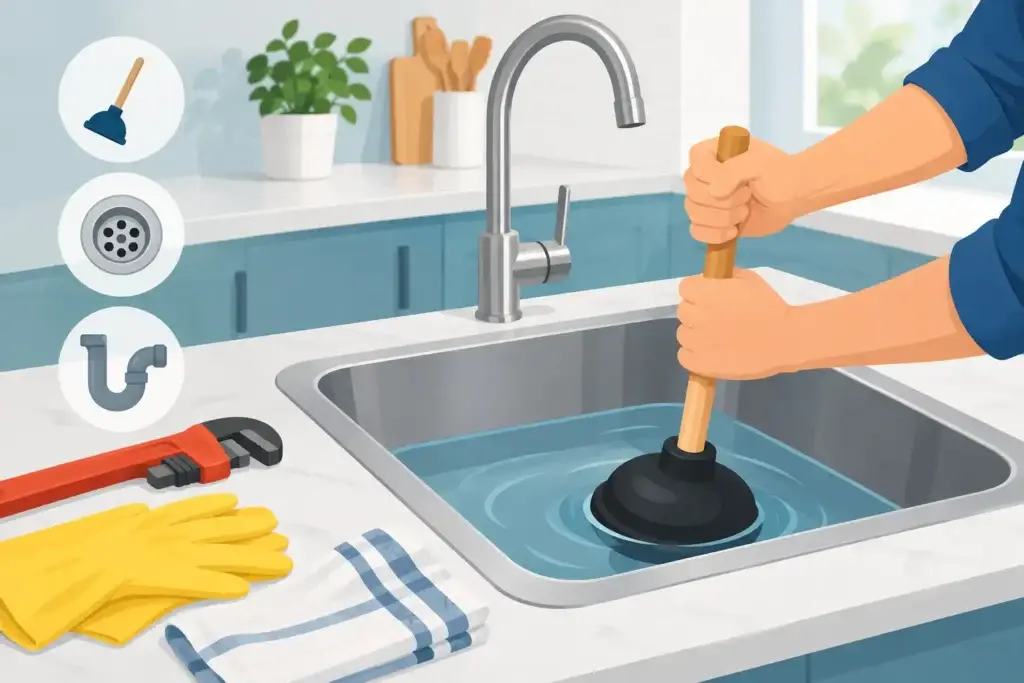
A sink plunger is often the best first tool for a clog close to the drain. Use a clean cup-style plunger, not the one used for toilets. For a double-basin sink, plug the second drain tightly with a stopper or wet rag. This creates pressure where you need it instead of letting air escape through the other side.
Add enough water to cover the plunger cup. Center it over the drain, press down to create a seal, and pump firmly 10 to 15 times. Keep the plunger straight and steady. After several strokes, lift it away and see whether the water starts moving.
Repeat the process two or three times if the drain begins to improve. If it remains completely blocked, do not keep plunging aggressively for long periods. Excessive force can loosen older pipe connections, especially under a sink with worn fittings or previous repairs.
Use hot water carefully for grease buildup
Kitchen sink clogs frequently come from cooking grease, oils, soap residue, and food particles that have collected inside the drain. Warm water may help soften a minor grease buildup, but the method depends on the type of plumbing in the property.
For metal drain pipes in good condition, slowly pour hot tap water down the drain after plunging. Avoid dumping a large pot of boiling water into a porcelain sink or aging PVC drain line. Sudden extreme heat can damage seals, stress older components, or crack certain fixtures.
A small amount of dish soap followed by hot tap water can help move light grease residue. This approach is useful for a slow drain, not a full blockage. If the sink is holding water, hot water will simply remain in the basin until the clog is cleared.
Skip chemical drain cleaners
Store-bought chemical drain cleaners can be tempting when a sink is clogged, but they are rarely the safest answer. Strong caustic or acidic products can damage older metal pipes, weaken seals, and create a hazardous situation for anyone who later opens the drain or removes the trap.
They can also fail to clear the real obstruction. A grease blockage, lodged utensil, disposal issue, or clog deeper in the branch line may remain in place while corrosive chemicals sit inside the pipe. If you have already used a chemical cleaner, tell your plumber before any drain work begins.
Clean the P-trap when the clog is close by
The curved pipe directly below the sink is called the P-trap. It holds water to block sewer gases, and it is also a common place for food debris and grease to collect. If plunging has not worked, cleaning the trap can be an effective next step for a homeowner or property manager who is comfortable working under the sink.
First, place a bucket and towels beneath the trap. Put on gloves. Loosen the slip nuts at both ends of the curved section by hand or with adjustable pliers if necessary. Lower the trap carefully and allow its water and debris to drain into the bucket.
Clean the trap and inspect it for cracks, worn washers, or heavy buildup. Look into the horizontal pipe leading into the wall as well. If debris is visible near the opening, remove it carefully. Reassemble the trap, hand-tighten the connections, and run water slowly while checking for leaks.
Do not force old plastic fittings. A brittle trap or cracked nut can quickly turn a drain problem into a cabinet leak. If the piping is corroded, difficult to access, or attached to a commercial sink setup, it is better to stop and have the line serviced properly.
Try a drain snake for a deeper blockage
A hand-crank drain snake can reach beyond the P-trap and break up a clog in the branch drain. For best results, remove the P-trap first and feed the cable into the pipe entering the wall. This prevents the cable from catching in the trap’s curve.
Advance the cable slowly. When you meet resistance, turn the handle while applying light forward pressure. Do not ram the cable through the line. Pull it back periodically to clear debris, then run water to test drainage.
A hand snake is appropriate for many small household clogs, but it has limits. It may not clear compacted grease, a heavy buildup in older pipes, roots in an exterior sewer line, or a blockage shared by multiple fixtures. Repeatedly forcing a snake can damage a pipe or push material farther into the system.
Signs the problem is not just the kitchen sink
A single clogged kitchen sink is often a local drain issue. However, certain warning signs suggest a larger plumbing problem that needs professional attention:
- Water backs up into the second sink basin, dishwasher, tub, or shower.
- Several drains are slow or clogged at the same time.
- The sink drains briefly, then backs up again soon after.
- You notice sewage odors, gurgling sounds, or water around a cleanout or floor drain.
- The clog returns repeatedly, even after cleaning the trap or using a hand snake.
In homes with older drain lines, recurring kitchen clogs may point to grease accumulation, pipe scale, a damaged section of line, or a sewer main issue. In rental and commercial properties, the source can also be heavy kitchen use, improper disposal practices, or a shared drain connection. A temporary opening in the line is not always a complete repair.
When to call a professional plumber
Call for professional drain cleaning when the clog will not clear with safe basic steps, when water is backing up elsewhere, or when there is any risk of overflow. This is especially important for restaurants, offices, hospitality properties, and rental units where a closed kitchen can disrupt operations or affect tenants.
A licensed plumber can identify whether the obstruction is in the sink trap, branch line, or main sewer connection. Professional equipment can clear the line more thoroughly than a small household snake, while inspection helps determine whether there is a damaged pipe or a recurring condition that needs a lasting repair.
For property owners in Seaside, Monterey County, and nearby communities, RS Plumbing provides direct local drain and sewer service backed by 15 years of experience. If a kitchen sink backup is becoming an emergency, prompt help can protect cabinets, flooring, and the rest of the plumbing system.
Keep kitchen sink clogs from coming back
The most reliable prevention starts with what goes into the drain. Keep cooking grease, oil, coffee grounds, pasta, rice, eggshells, produce stickers, and fibrous scraps out of the sink. Collect cooled grease in a container and dispose of it in the trash. Use a basket strainer to catch food particles before they enter the drain.
Run cold water when using a garbage disposal and keep it running briefly after the food has cleared. Cold water helps grease stay more solid so it can move through the disposal instead of coating the drain pipe. Even with a disposal, treat it as a convenience for small scraps, not a substitute for the trash can.
A slow kitchen sink is usually easier and less expensive to address than a full backup. Act when you first notice gurgling, standing water, or a drain that takes longer than usual, and you can often prevent a small blockage from becoming a disruptive plumbing call.
