
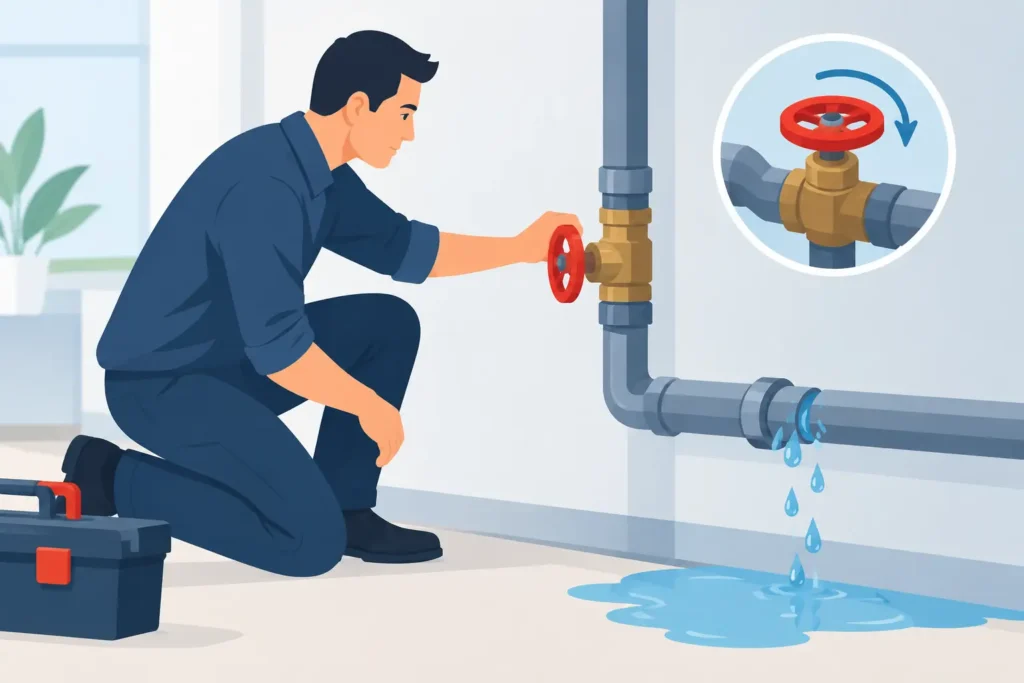
A burst supply line can release gallons of water in minutes, soaking flooring, cabinets, drywall, and belongings before help arrives. Knowing how to shut off water is one of the most useful steps a homeowner, landlord, or business owner can take during a plumbing emergency. The right valve depends on where the leak is coming from, but acting quickly can make the difference between a contained repair and major property damage.
Start by Finding the Source of the Leak
Before turning off the whole building’s water supply, look for a valve close to the problem. Most fixtures have individual shutoff valves that stop water only to that fixture. Using a local valve keeps the rest of the home or business operational while the repair is handled.
If water is spraying, pooling rapidly, coming through a ceiling, or the source is not immediately clear, do not spend too long investigating. Shut off the main water valve first. You can always turn it back on after a plumber identifies the issue.
Be careful around water near outlets, appliances, electrical panels, or extension cords. Do not step into standing water if electricity may be involved. Shut off power at a safe location if possible, then contact a qualified professional.
How to Shut Off Water at a Fixture
Many plumbing fixtures have small valves on the water supply lines beneath or behind them. These are usually oval-shaped, round, or lever-style handles connected to a pipe or flexible supply line. To close a traditional valve, turn it clockwise until it stops. For a lever valve, turn the handle a quarter turn so it is perpendicular to the pipe.
Do not force a valve that is rusted, heavily corroded, or stuck. Older valves can break when forced, creating a larger leak. If it will not move by hand, go to the main shutoff valve instead.
After closing the valve, open the fixture’s faucet or flush the toilet once to relieve pressure and confirm that water has stopped. A small amount of water may still drain from the line, but the flow should stop shortly.
Under a Sink
Kitchen, bathroom, and utility sinks usually have two shutoff valves beneath the cabinet: one for hot water and one for cold water. If the faucet or one of its supply lines is leaking, close both valves. If only one side is leaking and the other valve works properly, you may be able to isolate that line, but closing both is often the safer choice until repairs are complete.
Behind a Refrigerator or Dishwasher
A leaking ice maker line, refrigerator supply tube, or dishwasher connection may have a dedicated valve in a nearby cabinet, behind the appliance, or under the kitchen sink. Pulling appliances out can damage flooring or strain electrical and water connections, so shut off the main water if you cannot safely reach the local valve.
Shut Off Water to a Toilet
The toilet shutoff valve is normally on the wall or floor behind the toilet, connected to the supply line leading to the tank. Turn it clockwise to stop the incoming water. Then flush once to empty the tank as much as possible.
If the toilet is overflowing, remove the tank lid and lift the rubber flapper at the bottom of the tank into place if it is stuck open. You can also lift the float to stop the tank from refilling while you close the shutoff valve. Do not keep flushing an overflowing toilet. If sewage is backing up through the toilet, tub, or shower drain, the issue may be a sewer line blockage rather than a toilet problem.
Shut Off Water to a Water Heater
A water heater has a cold-water shutoff valve on the pipe entering the top of the unit. Closing this valve stops new water from entering the tank, which is useful if the heater or a connected line is leaking. The valve may be a round handle or a lever handle.
If there is an active leak at the water heater, turn off the cold-water supply and turn off the heater’s power source. For an electric water heater, switch off the appropriate breaker only if the area is dry and safe to access. For a gas water heater, turn the gas control knob to the off position if you can do so safely.
Do not drain a hot water heater just because you see water nearby. The tank, relief valve, drain valve, or a pipe above it may be the actual source. Draining a heater incorrectly can create scalding and flooding hazards. A leaking tank usually requires professional replacement, while a leaking connection may be repairable.
How to Shut Off Water at the Main Valve
The main shutoff valve stops water to the entire property. Every responsible property owner should know where it is before an emergency happens. In many homes, the valve is located where the main water line enters the building, often in a garage, utility room, crawl space, basement, exterior wall box, or near the water heater. In commercial spaces, it may be in a mechanical room, utility closet, or service area.
Look for a valve attached to a larger pipe. A gate-style valve has a round wheel that turns clockwise. A ball valve uses a straight lever: when the lever is perpendicular to the pipe, it is off. Turn the valve slowly and firmly, without excessive force.
Some properties also have a shutoff near the water meter. This may be outside near the curb or sidewalk and may require a meter key. In many cases, that equipment is owned or controlled by the water utility. Use the interior main valve whenever possible, especially if there is any question about access rules or whether the meter valve could be damaged.
Once the main water is off, open a cold-water faucet at the lowest practical point in the building, such as an exterior hose bib or first-floor sink. This helps release pressure from the plumbing lines. Then open a faucet on an upper floor, if available, to help air move through the system. Do not leave faucets running unattended if water service is restored unexpectedly.
What to Do After the Water Is Off
Stopping the water is the first priority, but the next steps protect the property and make the repair easier. Place buckets or towels under a slow leak, move furniture and valuables away from wet areas, and photograph visible damage for your records. If a ceiling is bulging with water, stay clear of it. A saturated ceiling can collapse without warning.
Avoid using drains, toilets, dishwashers, or washing machines if you suspect a sewer backup. Running more water into the system can push wastewater into lower drains or fixtures. Likewise, do not turn the main water back on repeatedly to test a leak. A failing supply line or hidden pipe leak can worsen quickly under full pressure.
For rental homes and commercial properties, notify the responsible manager or maintenance contact immediately. Document when the water was shut off, where the leak appeared, and what areas may have been affected. Clear communication helps protect tenants, customers, staff, and the property itself.
When a Plumber Should Take Over
A local shutoff is useful for a dripping faucet, toilet fill valve problem, or leaking fixture supply line. It is not a complete repair. Call for professional service when the source is inside a wall, beneath a slab, in a ceiling, near a water heater, or connected to the main line. Water discoloration, a sudden increase in the water bill, warm flooring, low pressure, and unexplained damp areas can also point to a hidden leak.
Immediate help is especially important for burst pipes, sewer backups, failed water heaters, leaking gas-adjacent equipment, and water entering electrical areas. RS Plumbing provides 24/7 emergency response across Seaside and Monterey County, with licensed and insured workmanship focused on resolving the underlying problem, not just slowing it down.
Make the Next Emergency Easier
Take a few minutes while everything is working properly to locate and label your fixture shutoffs and main water valve. Test accessible valves gently once in a while so you know whether they operate, and keep the area around the main valve clear. Property managers should make sure staff and tenants know who to contact after hours and where the main shutoff is located.
Water problems rarely wait for a convenient time. Knowing which valve to close gives you control in the first critical minutes and helps protect the people, property, and operations that depend on your plumbing.
