
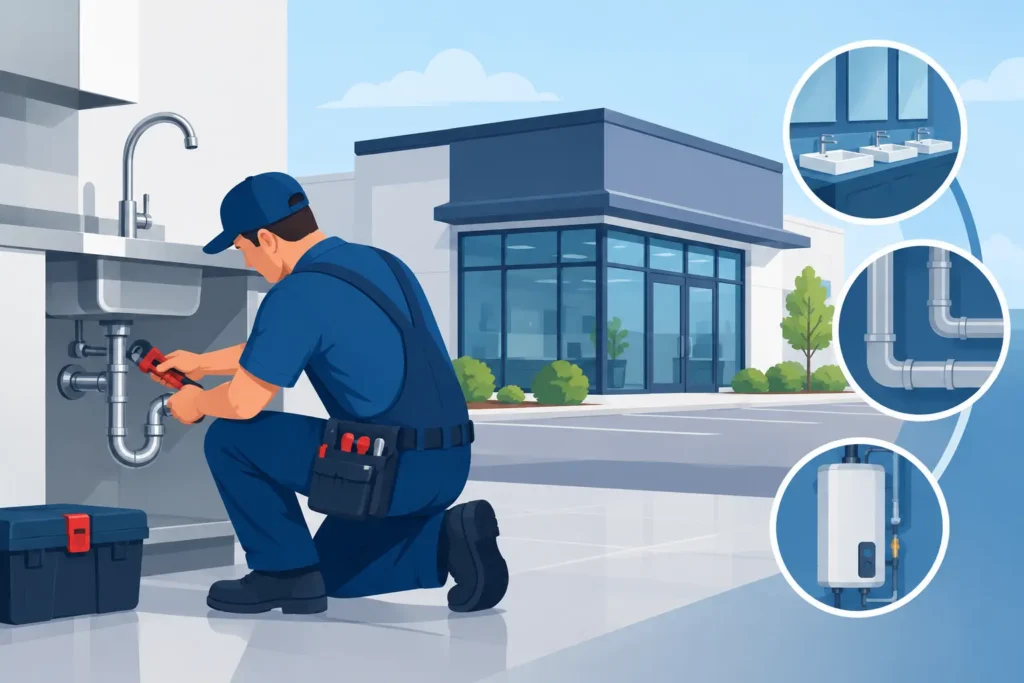
A restroom closure, sewer backup, or burst supply line can interrupt far more than a normal workday. It can send customers away, affect tenants, create slip hazards, and put staff in an uncomfortable position. So, what is commercial plumbing? It is the installation, repair, maintenance, and troubleshooting of plumbing systems in buildings used for business, public access, or multi-tenant operations.
Commercial plumbing may serve an office, retail store, restaurant, hotel, apartment community, medical office, school, warehouse, or other non-residential property. The basic systems are familiar – water lines, drains, toilets, fixtures, water heaters, gas piping, and sewer connections – but the demands on those systems are often much higher than they are in a single-family home.
What Is Commercial Plumbing?
Commercial plumbing covers the systems that deliver clean water, remove wastewater, provide hot water, and support sanitation throughout a commercial property. A plumber may handle a sudden emergency, such as a sewer line blockage flooding a restroom, or planned work, such as replacing aging fixtures, installing a new water heater, or adding gas piping for equipment.
The work is shaped by the building’s use. A small professional office may need dependable restroom fixtures and a breakroom sink. A busy restaurant may place heavy daily demand on drains, hot water, and kitchen plumbing. A hotel or apartment building has many bathrooms, multiple water-use points, and limited tolerance for an outage. Property managers also need repairs completed with minimal disruption to tenants and operations.
That is why commercial plumbing is not simply residential plumbing on a larger scale. It often involves higher-capacity equipment, more complex piping layouts, multiple users, code requirements, and a greater need for timely coordination.
How Commercial Systems Differ From Residential Plumbing
The biggest difference is volume. A home may have one or two bathrooms and predictable daily water use. A commercial property can have dozens of toilets, sinks, floor drains, water heaters, and fixture connections used by employees, tenants, customers, or guests throughout the day.
Commercial systems are also more likely to include equipment that is uncommon in a typical home. Depending on the building, that can include tankless or high-capacity water heaters, backflow prevention devices, recirculation systems, commercial faucets and flush valves, grease-related drainage components, or larger sewer mains. Each system must be sized, installed, and maintained for its intended demand.
Access can be another challenge. A leak may be hidden above a finished ceiling, behind a tenant wall, under a slab, or in a utility area that cannot be shut down for long. A qualified plumber needs to locate the root cause, explain the repair options clearly, and protect the property while work is performed.
Commercial properties also face a different level of risk when a problem is ignored. One clogged toilet at a retail location can affect customer access. A leak in a multi-unit building can damage several spaces. A sewer backup can create sanitation concerns that require immediate action, not a temporary patch.
Common Commercial Plumbing Services
Commercial plumbing needs range from routine maintenance to urgent repair. The right service depends on the property, the plumbing system, and how quickly the issue is affecting daily operations.
Drain Cleaning and Sewer Main Clearing
Slow drains are easy to overlook until several fixtures begin backing up at once. In a commercial building, recurring clogs can point to buildup, damaged piping, root intrusion, an obstruction, or a problem in the sewer main. Clearing a drain may restore service, but repeated blockages should be investigated rather than treated as a normal inconvenience.
Professional drain cleaning and sewer main clearing help restore flow while identifying whether the issue is isolated or part of a larger problem. For landlords and property managers, addressing recurring sewer concerns early can help prevent water damage, tenant disruption, and after-hours emergencies.
Leak Detection and Pipe Repair
A hidden water leak can waste water and damage walls, flooring, cabinets, ceilings, or structural materials before anyone sees a puddle. Signs may include unexplained increases in water use, stains, soft drywall, mildew odors, warm spots on a floor, or water meter activity when fixtures are off.
Commercial leak detection focuses on finding the source with as little unnecessary disruption as possible. The repair itself may be straightforward, or it may require access to piping behind finishes, under concrete, or in a shared utility area. The scope depends on the location of the leak and the condition of the surrounding pipe.
Restroom and Fixture Repairs
Restroom fixtures in businesses receive frequent use and wear. Running toilets, leaking faucets, failed flush valves, loose fixtures, and damaged supply lines can raise water costs and create a poor experience for customers and employees.
Replacing a worn fixture is sometimes the practical answer, especially when parts are no longer reliable or repeated repairs are adding up. In other cases, a targeted repair can safely extend the life of an existing toilet, faucet, or sink. A professional assessment helps property owners choose based on condition, usage, budget, and downtime.
Water Heater Service and Installation
Hot water is essential for many commercial operations. A failed water heater can affect employee restrooms, hospitality spaces, kitchens, cleaning routines, and tenant comfort. Warning signs include inconsistent temperatures, rusty water, strange noises, visible leaks, slow recovery, or a complete loss of hot water.
Commercial water heater needs vary widely. A small office may have a modest demand, while a restaurant, lodging property, or multi-unit building may need greater recovery capacity or a system designed to support multiple fixtures at once. Proper sizing matters. An undersized unit can struggle during peak demand, while an oversized system can increase installation and operating costs.
Gas Line Work
Commercial gas piping must be handled carefully and according to applicable requirements. Whether the project involves a water heater, kitchen equipment, a building upgrade, or a new appliance connection, the line must be properly installed, tested, and safe for use.
If there is a suspected gas leak, leave the area if needed, avoid flames and electrical switches, and contact the gas utility or emergency services as appropriate. Gas concerns are not a do-it-yourself repair and should not wait for regular business hours.
Why Response Time Matters for Businesses
Plumbing problems do not follow a convenient schedule. A retail restroom can overflow before opening. A tenant may report a leak late at night. A sewer backup can occur during a busy service period. Waiting can turn a contained repair into damaged inventory, ruined flooring, unhappy tenants, or a temporary closure.
Fast response matters, but diagnosis matters just as much. The goal should be to stop active damage, restore safe operation where possible, and determine what caused the failure. A quick repair that does not address a damaged sewer line, ongoing leak, or recurring obstruction may only postpone the next disruption.
For Monterey County businesses and managed properties, working with a local plumber also helps when access, scheduling, and follow-up need to be coordinated quickly. RS Plumbing provides commercial support along with 24/7 emergency response, backed by licensed and insured workmanship and 15 years of professional experience.
When to Call a Commercial Plumber
Call for professional help promptly when a sewer line backs up, water is actively leaking, multiple drains are slow or clogged, toilets overflow repeatedly, hot water fails, or there is any concern about a gas line. These are not issues to leave for a maintenance list when they affect sanitation, safety, or operations.
It also makes sense to schedule service before an emergency develops. Aging water heaters, older supply lines, recurring drain problems, and fixtures that need constant attention are all opportunities to plan a repair or replacement on your schedule. For landlords and property managers, that approach can reduce surprise costs and avoid interrupting tenants.
A commercial plumbing system should support the work happening inside the building without drawing attention to itself. When it starts to interfere with customers, staff, tenants, or daily operations, prompt professional service can protect the property and help keep business moving.
