
A drain that backs up again after plunging is telling you something: the blockage is still there, or the pipe has a larger problem behind it. Effective drain cleaning for stubborn clogs is not about forcing water through for a few hours. It is about finding where the restriction is, removing it without damaging the plumbing, and checking whether the line needs further attention.
For homeowners, landlords, property managers, and business owners in Monterey County, a slow or blocked drain can quickly become a sanitation issue, a tenant complaint, or an interruption to daily operations. The right response depends on the drain involved, how often it clogs, and whether other fixtures are affected.
Why Some Clogs Keep Coming Back
Most drains do not close off all at once. Buildup usually starts as a narrow coating on the pipe wall, then catches more debris every time water goes down the drain. Kitchen lines collect grease, food particles, and soap residue. Bathroom drains commonly collect hair, toothpaste, soap scum, and mineral deposits. Toilets can clog from excess paper, non-flushable items, or a problem farther down the branch line.
A repeated clog can also point to an issue that a basic plunger cannot reach. Tree roots may enter an aging sewer line through small openings. A pipe may have shifted, cracked, or developed a low area that holds waste. In commercial kitchens, grease buildup can become severe enough to restrict the entire line. These conditions need more than a quick chemical treatment.
The pattern matters. One slow bathroom sink is often a local blockage near the drain. A toilet that gurgles when the shower runs, several drains that empty slowly, or wastewater backing up into a tub can indicate a sewer main problem. That is the point to stop using water and arrange professional service promptly.
Drain Cleaning for Stubborn Clogs Starts With the Right Diagnosis
Before choosing a method, identify what the drain is doing. Is it slow all the time, completely blocked, or only overflowing when a nearby fixture drains? Has the problem returned several times in recent months? Is there a sewage odor, gurgling sound, or water appearing at a floor drain?
These details help determine whether the blockage is in a fixture trap, a branch drain, or the main sewer line. They also prevent wasted effort. Snaking a bathroom sink line may solve a hair clog, but it will not correct roots in the sewer lateral. Pouring a store-bought cleaner into a kitchen sink will not remove a heavy grease deposit extending several feet down the pipe.
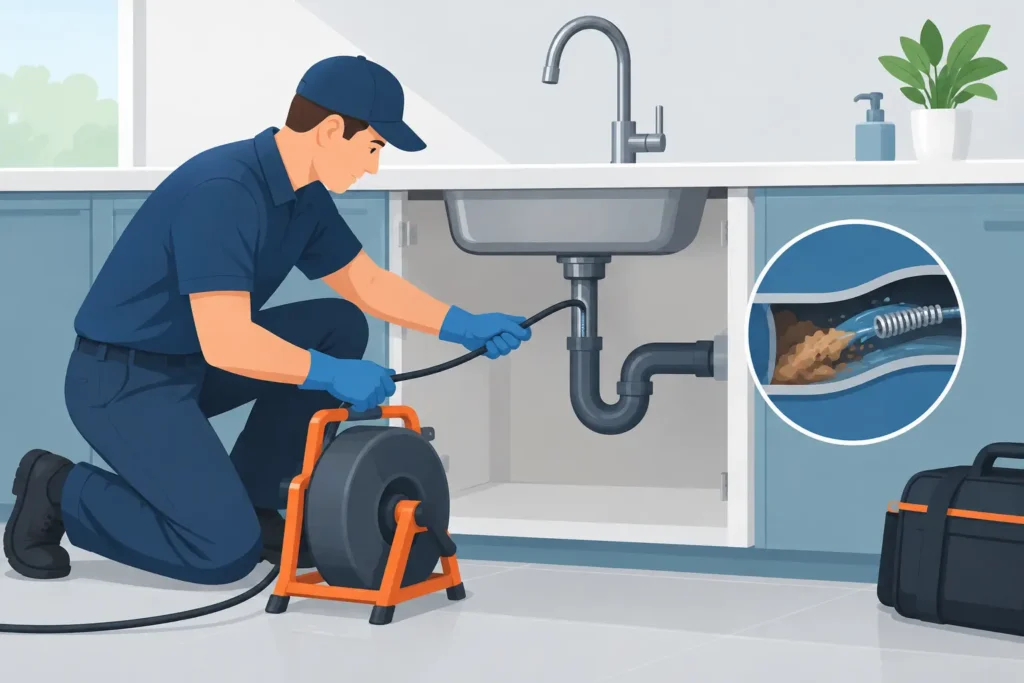
A professional drain inspection may include using the proper cable machine for the pipe size and blockage, then running water to confirm normal flow. For repeat sewer issues, a camera inspection can show the actual condition inside the pipe. It can reveal roots, scale, grease, broken sections, offsets, or a sagging line. Knowing the cause allows the repair or cleaning method to match the problem instead of treating symptoms.
Safe Steps You Can Take Before Calling for Help
If one sink, tub, or shower is draining slowly and there is no sewage backup, start with simple measures. Remove visible hair or debris from the stopper or drain opening. A clean plunger used with enough water to cover its cup can loosen a nearby blockage. For a double-basin kitchen sink, seal the opposite drain before plunging so pressure reaches the clog.
For a sink, checking and cleaning the P-trap can help when the blockage is close to the fixture. Place a bucket underneath first, and avoid this step if the pipes are corroded, fragile, or difficult to access. Rental property owners should also consider who will be responsible for reassembly and leaks before asking a tenant to take plumbing apart.
Avoid mixing cleaners or pouring multiple chemical products into a drain. Chemical drain openers can produce heat and fumes, harm certain pipe materials, and leave corrosive liquid sitting in a blocked line. They can also create a hazard for anyone who later has to open the trap or cable the drain. If a cleaner did not solve the problem, tell the plumber what product was used.
Do not keep flushing a toilet that is rising toward the rim. Shut off the toilet’s water supply valve if it continues filling, protect the surrounding area, and call for assistance. Repeated flushing can turn a manageable clog into water damage.
When a Drain Snake Is Enough and When It Is Not
A drain snake, also called a cable machine or auger, is often the right tool for compact clogs such as hair, paper, soap buildup, or small obstructions. The cable reaches into the line, breaks up or retrieves the blockage, and restores the pipe opening. Used correctly, it is far more effective than pushing at a clog from the fixture with a plunger alone.
However, snaking has limits. It may punch a small opening through grease or roots without fully cleaning the pipe wall. Water may flow again, but debris can catch on the remaining buildup and create another stoppage soon afterward. This is why the right method depends on the material inside the line and the condition of the pipe.
Hydro jetting uses controlled high-pressure water to scour grease, sludge, scale, and root debris from suitable sewer and drain lines. It can provide a more thorough cleaning for persistent buildup, particularly in commercial settings or kitchen drains. But hydro jetting is not automatically appropriate for every property. Older, cracked, or compromised pipes should be evaluated first so cleaning pressure does not worsen an existing failure.
Warning Signs of a Main Sewer Clog
A main sewer blockage needs faster action because every fixture in the building depends on that line. Stop running dishwashers, washing machines, showers, and toilets if you see wastewater backing up from a low drain. In many homes, that low point is a shower, tub, floor drain, or cleanout area.
Watch for these signs, especially when they occur together:
- Multiple drains are slow or clogged at the same time.
- Toilets gurgle or bubble when sinks, showers, or appliances drain.
- Wastewater comes up through a tub, shower, or floor drain.
- There is a persistent sewage smell inside or near the property.
- The problem returns after temporary clearing.
A sewer backup can affect flooring, walls, inventory, tenant spaces, and customer areas. For businesses, delaying service may also create a health concern and force an operational shutdown. Quick professional clearing and an honest assessment of the line condition can limit damage and help prevent the next backup.
Preventing the Next Blockage
Good drain habits reduce risk, but they cannot repair an aging or root-damaged sewer line. Keep grease, coffee grounds, food scraps, wipes, paper towels, hygiene products, and “flushable” wipes out of drains and toilets. Even products labeled flushable do not break down the same way toilet paper does and can catch in bends or rough pipe sections.
Use drain screens in showers and bathroom sinks to collect hair, and clean them regularly. In kitchens, allow grease to cool in a container and dispose of it in the trash rather than rinsing it down with hot water. Hot water may move grease farther along the pipe, but it does not make it disappear.
Properties with recurring roots, heavy kitchen use, older drain piping, or a history of sewer backups may benefit from scheduled maintenance. The right interval varies. A busy restaurant may need service more often than a single-family home, while a property with known root intrusion may need periodic inspection and cleaning before the rainy season or high-use periods.
Get the Clog Cleared Without Guesswork
When a clog keeps returning, the goal is not simply to get water moving for the day. The goal is to protect the property by identifying whether the line needs cabling, thorough cleaning, camera inspection, or repair. RS Plumbing provides direct local drain and sewer service for Seaside, Monterey County, and nearby communities, with 24/7 response for urgent plumbing problems.
If wastewater is backing up, multiple fixtures are affected, or a drain has failed after repeated DIY attempts, stop using the affected plumbing and get qualified help. A clear diagnosis now can prevent a small blockage from becoming a damaged floor, disrupted business day, or avoidable sewer emergency.

Pingback: Toilet Replacement Installation Service You Can Trust – RS PLUMBING
Pingback: Commercial Plumbing Maintenance Plans That Prevent Shutdowns – RS PLUMBING
Pingback: Plumbing Services for Landlords That Protect Rentals – RS PLUMBING
Pingback: How to Prevent Sewer Backups at Your Property – RS PLUMBING