
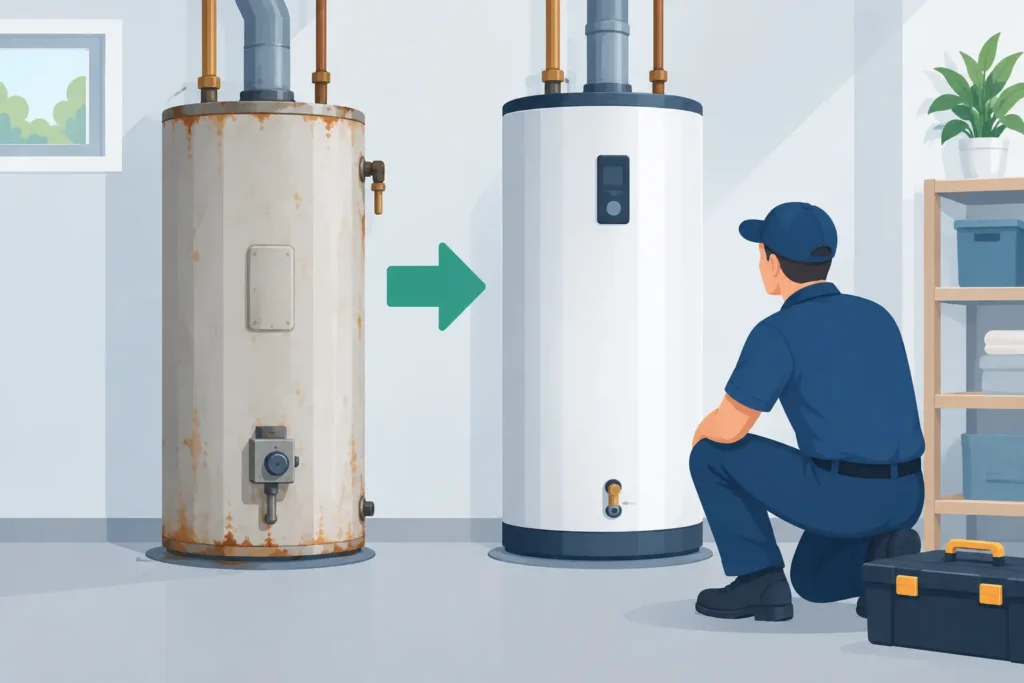
A cold shower is inconvenient. A leaking water heater can damage flooring, drywall, stored belongings, and the rooms below it. Water heater replacement is often the right call when a unit is unreliable, leaking, inefficient, or nearing the end of its expected service life. The key is acting before a manageable equipment problem becomes a property repair.
For homeowners, landlords, and business owners in Monterey County, the decision is not always as simple as replacing an old tank with the same model. Fuel type, household demand, available space, venting, water quality, and local code requirements all affect the right installation. A licensed plumber can identify whether repair is still worthwhile and recommend a replacement that fits the property rather than just the opening in the utility room.
Signs Water Heater Replacement Should Not Wait
Most water heaters give warning signs before they fail completely. Some issues can be repaired, especially on newer units. A failed heating element, worn thermostat, pilot assembly problem, or pressure relief valve may not require a full replacement. But a tank itself cannot be safely repaired once corrosion or a structural leak has started.
Watch for these common signs:
- Water pooling around the base of the tank, especially if the leak comes from the tank body rather than a pipe fitting or valve.
- Rust-colored water from hot-water fixtures, which can point to corrosion inside the tank or aging water lines.
- Rumbling, popping, or banging sounds as the system heats, often caused by sediment buildup at the bottom of the tank.
- Hot water that runs out much faster than it used to, even after basic components have been checked.
- A unit that is roughly 10 years old or older and needs repeated repairs.
A small amount of moisture should not be ignored. Condensation can occur in some conditions, but standing water near a heater needs prompt attention. A plumber can determine whether the source is a loose connection, a temperature and pressure relief valve, the drain valve, or a failing tank.
Gas-related symptoms need fast professional evaluation. If you smell gas, leave the immediate area, avoid switches and open flames, and contact the gas utility or emergency services as appropriate. Do not try to relight or repair a gas water heater yourself.
Repair or Water Heater Replacement: How to Decide
The best choice depends on the unit’s age, condition, repair history, and the cause of the problem. Replacing a relatively new water heater because of a failed component may not make financial sense. On the other hand, investing in another repair for a corroded 12-year-old tank often delays a more expensive failure.
A practical rule is to look at the whole picture. If the repair is minor and the water heater has years of expected service left, repair can be sensible. If the tank is leaking, the unit is old, or the repair cost is significant compared with replacement, a new installation generally provides better value and more predictable performance.
Property owners should also consider the cost of disruption. For a rental property, restaurant, office, or hospitality space, inconsistent hot water can quickly affect tenants, employees, guests, and daily operations. Scheduling a planned replacement is usually less disruptive than responding to a tank failure after hours.
Choosing the Right Water Heater for Your Property
The right replacement starts with accurate sizing. A tank that is too small leaves occupants waiting for hot water. A tank that is oversized can waste energy and take up valuable space. Tankless systems offer another option, but they are not automatically the best fit for every home or commercial property.
Conventional Tank Water Heaters
Storage-tank water heaters remain a dependable choice for many households and smaller commercial spaces. They store a set volume of heated water and are available in a range of capacities. A properly sized tank can serve a family well without requiring major changes to the existing plumbing layout.
Tank units are often more straightforward to replace when the current location, fuel source, and venting are suitable. Still, installation details matter. Proper drain pan placement, earthquake strapping, shutoff valves, vent connections, expansion tank requirements, and pressure relief piping are not optional details. They protect the building and help the system operate safely.
Tankless Water Heaters
Tankless water heaters heat water on demand rather than storing it in a tank. They can provide a continuous supply when correctly sized and may save space. They can be a strong option for homes with limited room, households that want long-duration hot water, or properties planning for updated efficiency.
The trade-off is that tankless installation may require upgrades. Gas models can need a larger gas line, new venting, electrical work, or changes to water piping. Electric tankless units can place substantial demand on an electrical panel. A professional assessment prevents a customer from choosing a unit that looks efficient on paper but cannot meet the property’s actual hot-water demand.
Gas, Electric, and Other Considerations
Existing utility access often influences the decision, but it should not be the only factor. Gas water heaters typically recover hot water quickly, while electric models can be a practical option where gas service or venting is unavailable. Heat pump water heaters can offer efficiency benefits in appropriate locations, though they need enough surrounding air space and may not suit every garage, closet, or commercial setting.
Water quality also matters in coastal and hard-water areas. Mineral sediment can shorten equipment life and reduce efficiency. Maintenance practices, including periodic flushing when recommended for the unit and water conditions, can help protect the investment after installation.
What Professional Installation Protects
A water heater is connected to water lines, fuel or electrical systems, drainage, and safety controls. An improper installation can create leaks, poor performance, code violations, combustion concerns, or property damage. The lowest initial quote is not a value if the work leaves behind a safety issue or requires correction later.
Professional installation begins with checking the existing setup, not simply swapping equipment. The plumber should confirm capacity needs, inspect supply lines, examine venting where applicable, verify shutoffs, and identify any necessary code updates. For gas units, correct gas piping and combustion venting are especially important. For all installations, the temperature and pressure relief valve must discharge safely, and the unit must be secured appropriately.
Removal matters too. An aging tank can hold sediment and residual water, and a damaged drain connection or rushed removal can create an avoidable mess. Careful work protects nearby walls, floors, and access areas while the old unit is disconnected and the new one is put into service.
RS Plumbing provides licensed and insured water heater service for residential and commercial properties across Seaside, Monterey County, and surrounding communities. With 15 years of experience, the team can assess the condition of the current unit, explain practical options plainly, and provide a free estimate before work begins.
Plan Before the Tank Fails
If your water heater is still operating but approaching the end of its life, planning ahead gives you more control. You can compare tank and tankless options, confirm the right capacity, budget for any necessary upgrades, and schedule work at a convenient time. That is especially helpful for landlords and business owners who need to limit downtime for tenants, customers, or staff.
Keep the area around the water heater accessible and check it occasionally for corrosion, dampness, or changes in performance. If you notice a leak, a sudden drop in hot-water capacity, discolored hot water, or unusual noises, arrange an inspection promptly. Early action may prevent a flooded utility room and gives you the best chance to make a clear, unhurried decision.
Reliable hot water should not be something you think about every day. When a unit starts showing its age, a properly planned replacement can protect your property and restore confidence every time a hot-water tap is turned on.
