
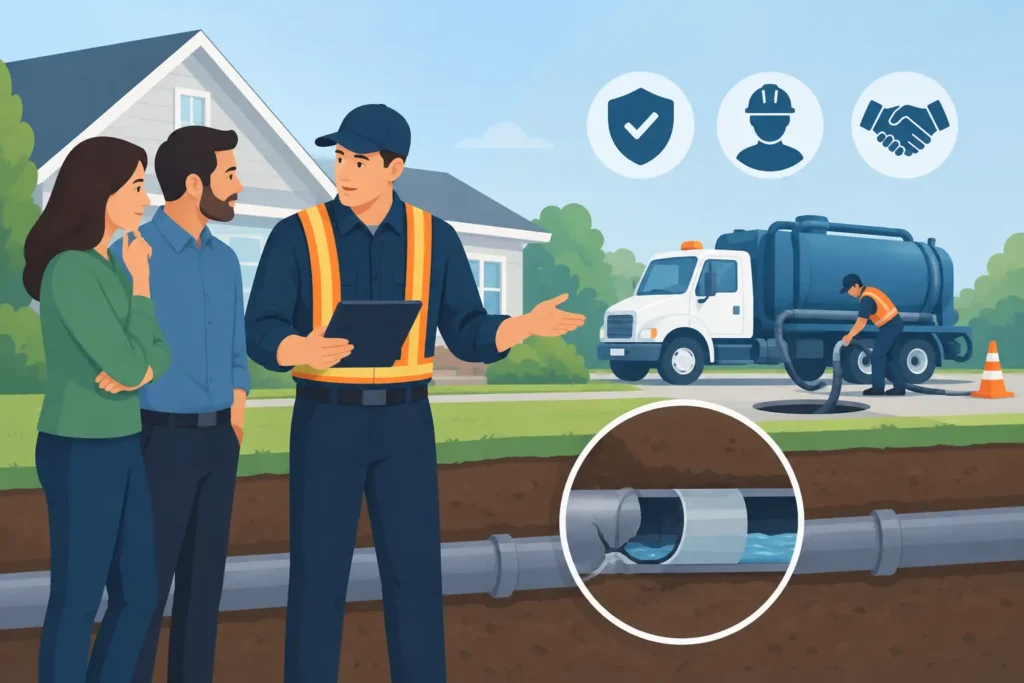
A sewer backup is not a problem to watch for a few more days. Wastewater in a tub, toilet, floor drain, or cleanout can damage finishes, interrupt business operations, and create a sanitation concern quickly. The right sewer line repair contractor helps you identify where the failure is, explain the repair choices plainly, and protect your property while the work is completed.
For homeowners and property managers in Monterey County, the goal is not simply to get water moving again. It is to correct the cause of the blockage, break, root intrusion, or collapsed pipe so the same problem does not return at the next heavy use or storm.
Start With a Clear Diagnosis
A slow drain in one bathroom may be a local drain issue. Multiple slow drains, gurgling toilets, water backing up in a shower, or sewage appearing at a lower-level fixture usually point to a sewer main problem. Those symptoms deserve prompt professional attention.
Before recommending a major repair, a qualified contractor should determine what is happening inside the line. Sewer camera inspection is often the most useful first step because it can reveal root growth, grease buildup, offset pipe joints, cracks, sagging sections, corrosion, or a collapsed line. The camera footage also helps establish the location and depth of the issue.
This matters because sewer line repair is not one-size-fits-all. A line blocked by roots may need clearing and targeted repair. A pipe with widespread deterioration may need replacement. If a contractor immediately recommends excavation without explaining the diagnosis, ask what evidence supports that recommendation.
A good diagnosis should answer practical questions: Is the pipe blocked, broken, or both? Is the issue located on the private sewer lateral or farther downstream? Is the damage isolated to one section? Can the line be repaired without replacing the entire run? Clear answers help you make a sound decision instead of paying for a temporary patch or unnecessary work.
What a Sewer Line Repair Contractor Should Explain
Sewer work can feel overwhelming because much of the problem is underground. You should not be expected to approve a repair based on vague descriptions. A professional sewer line repair contractor should walk you through the condition of the pipe, the available methods, expected disruption, permit needs, and the scope of work included in the estimate.
For many properties, the main repair options are conventional excavation, spot repair, pipe bursting, or trenchless lining. The best fit depends on pipe material, damage type, line layout, access, depth, and local code requirements.
Conventional Excavation
Excavation exposes the damaged pipe so it can be removed and replaced directly. It can be the right approach when a sewer line has collapsed, has severe bellies, includes damaged connections, or cannot support a trenchless method. It may also be necessary when the line needs a change in slope.
The trade-off is disruption. Excavation can affect landscaping, concrete, driveways, patios, or interior flooring if the line runs beneath the structure. A reliable contractor will explain where access is needed and discuss restoration responsibilities before work starts.
Trenchless Repair Options
Trenchless sewer repair can reduce the amount of digging needed, which may help preserve landscaping and hardscape. Pipe lining creates a new pipe within an existing pipe, while pipe bursting pulls a replacement pipe through as the old line is fractured outward.
These methods are valuable, but they are not automatically the best choice. A severely collapsed pipe, a line with major offsets, or certain connection issues may rule out lining. Pipe bursting also needs suitable access points and clearance. The right contractor explains whether trenchless repair is appropriate for your specific line rather than presenting it as a universal solution.
Targeted Repairs and Full Replacement
A localized break does not always mean the full sewer lateral needs replacement. If the remaining pipe is in sound condition, a targeted repair may be a practical investment. On the other hand, repeated backups in an older line with several damaged sections can make full replacement the more dependable long-term choice.
Ask the contractor to explain the condition of the rest of the line. The least expensive repair today is not always the lowest-cost solution over the next several years, especially for rental properties, restaurants, offices, and other buildings where a backup can disrupt occupants or customers.
Verify Licensing, Insurance, and Local Experience
Sewer repairs involve excavation, pipe installation, drainage performance, permits, and possible work near gas, water, electrical, or irrigation lines. Hiring an appropriately licensed and insured plumbing contractor is a basic protection for your property.
Ask whether the contractor handles permits and inspections when required. Requirements can vary by city and the nature of the work, so a local contractor should be familiar with the process in Seaside, Marina, Salinas, Carmel, Pacific Grove, and surrounding Monterey County communities. Proper permits and inspections can protect property value and help prevent problems when a home or commercial building is sold, refinanced, or reviewed by an insurer.
Experience also matters when the repair crosses landscaped yards, paved areas, tight access locations, or active commercial spaces. The contractor should have a plan for locating utilities, protecting work areas, controlling wastewater exposure, and minimizing downtime.
Compare Estimates Beyond the Bottom Line
A free estimate is useful only when the scope is clear. Two sewer repair prices can look very different because one includes camera inspection, permits, excavation, replacement pipe, cleanouts, backfill, testing, and basic surface restoration while another leaves several of those items open.
Review the estimate for the type and length of pipe being repaired, access locations, method of repair, permit handling, anticipated restoration, and whether unforeseen conditions are addressed. Underground work can reveal hidden problems once excavation begins, but the contractor should explain how changes are approved and communicated before additional work is performed.
Be cautious with estimates that promise a permanent repair without documenting the pipe condition. Also be cautious with a low quote that does not identify materials, repair limits, or cleanup expectations. Honest communication upfront is usually a better sign than a price that seems too good to be true.
Know When the Situation Is an Emergency
Some sewer issues should be addressed immediately. Active sewage backup, wastewater spilling from a cleanout, repeated toilet overflows, or a commercial restroom outage can quickly become a health, safety, and property-damage concern. Avoid using sinks, toilets, dishwashers, and laundry equipment until the line is assessed, since additional water can worsen the backup.
If sewage has entered living or work areas, keep people and pets away from the affected space. Do not attempt to open a pressurized cleanout yourself. A professional can safely assess the line, clear the immediate blockage when possible, and determine whether repair is needed.
For urgent sewer main clearing and repair needs, RS Plumbing provides direct local service, 24/7 emergency response, free estimates, and licensed, insured workmanship backed by 15 years of experience. Prompt help can limit damage while giving you a clear path forward.
Questions Worth Asking Before You Approve Work
You do not need plumbing expertise to ask good questions. Start by asking what the camera inspection showed, where the damage is located, and why the recommended method is the best fit. Ask whether the repair solves the root issue or only restores flow temporarily.
It is also reasonable to ask about permits, utility locating, expected disruption, cleanup, testing, warranties, and restoration of affected surfaces. For landlords and commercial property owners, ask how the contractor will coordinate access and reduce disruption to tenants, staff, or customers.
The answers should be direct. Sewer work has variables, but a contractor should never make you feel rushed into a decision without understanding the scope.
Protect Your Property Before the Next Backup
Once a sewer line is repaired, regular care can help avoid preventable clogs. Keep grease, wipes, paper towels, hygiene products, and heavy food waste out of drains. If roots have been a recurring concern, ask whether periodic camera inspections or maintenance clearing make sense for your property. Older homes may also benefit from knowing the sewer line material and condition before an emergency occurs.
When wastewater is backing up, waiting rarely makes the repair simpler. Choose a contractor who can diagnose the line accurately, explain the trade-offs honestly, and complete the work with care for the property you have worked hard to maintain.
