
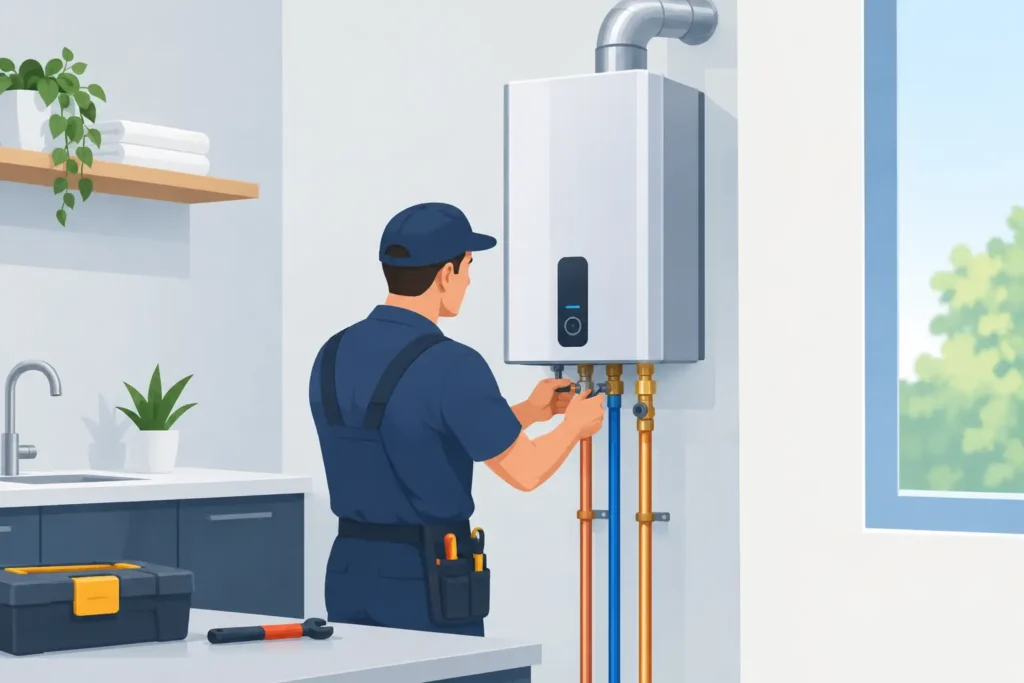
A tankless water heater can solve a frustrating problem: the last person in the house should not be left with a cold shower. But tankless water heater installation is not a simple swap for a standard storage-tank unit. The equipment is smaller, but the planning behind it is often more involved.
For homeowners, landlords, and business owners in Monterey County, a properly installed tankless system can provide dependable hot water, save floor space, and reduce standby energy loss. The right result depends on choosing a unit that matches the property, confirming the gas and venting requirements, and completing the work to current code.
Why Tankless Installation Requires Careful Planning
A conventional water heater stores hot water in a large tank. A tankless unit heats water only when a fixture calls for it. When someone opens a shower valve, starts a dishwasher, or turns on a sink, cold water flows through the unit and is heated on demand.
That operating difference affects nearly every part of the installation. Tankless heaters need enough fuel supply and electrical support to meet peak demand. Gas-fired models often require a larger gas line than the existing water heater used. They may also need new venting materials, a condensate drain, and a location that allows proper service access.
The size of the home alone does not determine what unit is needed. A two-bathroom home with a large soaking tub, a rainfall shower, and frequent simultaneous hot-water use may need more capacity than a larger home with modest fixtures. For commercial properties, the demand can be even more specific. A restaurant hand sink, office restroom, salon, or rental property has its own usage pattern and recovery needs.
Installing the wrong unit can lead to temperature swings, limited hot-water flow, excessive cycling, or an appliance that cannot keep up during busy times. Proper assessment comes before equipment selection.
Sizing a Tankless Water Heater for Real Demand
Tankless units are generally rated by gallons per minute, or GPM. That rating describes how much water the system can heat at a particular temperature rise. The colder the incoming water, the more work the heater must do to deliver comfortable hot water.
In coastal California, incoming water temperatures and household usage can vary by season and property location. A professional installation should account for the temperature of the incoming water, the desired outlet temperature, and the fixtures likely to run at the same time.
Consider a household where one person showers while another runs the kitchen faucet and the washing machine. The heater must serve the combined demand, not just the shower. A property manager should also consider peak-use periods in a rental. A system that seems adequate during a quiet afternoon may fall short when several tenants are getting ready for work or school.
There are four practical questions that help determine appropriate capacity:
- How many showers, sinks, appliances, and other hot-water fixtures may run at once?
- What type of fuel is available: natural gas, propane, or electricity?
- Is the unit serving an entire property, a detached unit, or one dedicated fixture area?
- Does the existing plumbing layout create long waits for hot water at distant fixtures?
Some properties benefit from one whole-house unit. Others may be better served by separate units for different areas, especially when there is a long distance between bathrooms, kitchens, or commercial wash stations. The best choice depends on the building and its daily demand, not a one-size-fits-all recommendation.
Gas Lines, Electrical Work, and Venting
Gas supply is one of the most common issues during a tankless water heater upgrade. Many tankless gas units require significantly more BTUs than a storage-tank water heater. An undersized gas line can prevent the appliance from operating correctly, even if the heater itself is new.
A qualified plumber should evaluate the existing gas system, including the pipe size, run length, connected appliances, gas meter capacity, and required load. In some cases, the gas line can be upgraded from the existing branch. In others, a new line or additional changes may be needed to safely support the unit.
Venting also matters. Modern high-efficiency condensing tankless heaters commonly use approved plastic venting materials and produce condensate that must be drained correctly. Non-condensing units may require different vent materials and clearances. The installation location, vent route, termination point, and local code requirements all affect the final plan.
Electrical needs should not be overlooked. Even gas-fired tankless heaters use electricity for controls, ignition, fans, and freeze protection. A nearby properly rated electrical connection may be required. Electric tankless units can demand substantial amperage and may require electrical panel upgrades. For that reason, an electric model is not automatically the easier replacement option.
Choosing the Right Installation Location
A tankless water heater can be installed indoors or outdoors when the model and local conditions allow it. Indoor units need proper venting and combustion air considerations. Outdoor units avoid certain venting requirements, but they still need protection from weather, damage, and freezing conditions.
Access for future maintenance is just as important as finding a wall with enough room. The system should be placed where a technician can inspect valves, flush the heat exchanger, service filters, and reach the controls without removing walls or working around unsafe obstructions.
For homes with hard water, routine flushing helps reduce mineral buildup inside the heat exchanger. Installing isolation valves during the original installation makes this service much more straightforward. A water treatment recommendation may also make sense in certain situations, but it should be based on the property’s actual water conditions and equipment needs.
Permits and Professional Installation Standards
Water heater replacement and gas piping work may require permits and inspections depending on the location and scope of work. These requirements are not paperwork for its own sake. They help confirm that fuel connections, venting, pressure relief provisions, drainage, electrical connections, and clearances meet applicable safety standards.
A professional installer should explain what the project involves before work begins. That includes whether the existing gas line is sufficient, where the venting will run, whether condensate drainage is needed, and what changes may affect the estimate. Clear communication matters because a lower initial price can become costly if required upgrades are ignored or discovered after installation starts.
For rental and commercial property owners, properly documented work can also help protect the building, occupants, and operations. A water-heating failure can disrupt a tenant, close a restroom, affect food-service sanitation, or create a complaint that needs immediate attention.
What to Expect During Installation Day
The first step is shutting off the water, fuel, and power connections serving the old heater. If a tank water heater is being removed, the remaining water must be drained and the unit safely disconnected. The new tankless heater is then mounted, connected to water and gas piping, vented as required, and connected to power and drainage components.
The installer should test for gas leaks, confirm proper water flow, check vent operation, verify temperature settings, and make sure the unit fires and responds correctly under demand. The work can take longer when a gas line, vent route, electrical circuit, or drain connection must be added or modified. A straightforward replacement may be completed in a day, while a more complex retrofit can require additional coordination.
Before the job is finished, ask how to operate the controls, where the shutoff valves are located, and what maintenance the manufacturer recommends. Knowing these details helps prevent small concerns from turning into a no-hot-water call later.
When a Tankless System May Not Be the Best Fit
Tankless water heaters offer real benefits, but they are not the automatic answer for every property. The upfront installation cost can be higher than replacing a basic storage-tank heater, particularly when gas piping, venting, electrical upgrades, or water treatment are necessary.
A conventional tank unit may be a practical choice when budget is the primary concern, hot-water demand is modest, and the existing setup is already in good condition. On the other hand, tankless equipment can be especially appealing where space is limited, demand is frequent, or the owner plans to stay in the property long enough to value long-term efficiency and service life.
The right decision starts with an honest evaluation of the building rather than a sales pitch. RS Plumbing provides local, licensed and insured plumbing service backed by 15 years of experience, with free estimates for property owners who want a clear plan before work begins.
A water heater should be ready when your home, tenants, customers, or employees need it. If your current system is failing, undersized, or taking up more space than it should, schedule an assessment before the next cold shower or business interruption forces a rushed decision.

Pingback: When Water Heater Replacement Is the Right Move – RS PLUMBING